
Introduction – A Shift Away from Standardization
Across global hospitality markets, a structural shift is becoming increasingly visible. While large hotel groups and standardized concepts continue to dominate in scale, a growing segment of travelers is actively turning away from uniform experiences.
Boutique hospitality is emerging as a response to this shift. For operators and investors alike, smaller, experience-driven concepts are no longer niche – they represent a strategic alternative in a market where differentiation has become critical.
The Limits of Standardized Hospitality
For decades, large-scale hospitality has been built on consistency. Standardized rooms, predictable services, and global brand recognition created efficiency and trust.
However, this model also introduced a fundamental limitation: interchangeability. A hotel experience in one city increasingly mirrors that of another, reducing the emotional connection to place.
As travel becomes more accessible, this lack of differentiation is no longer a competitive advantage. It is a structural weakness.
Authenticity as a Market Driver
Modern travelers are increasingly seeking experiences that feel specific, local, and unrepeatable.
This shift reflects a broader change in consumer behavior, where authenticity, cultural connection, and meaningful experiences outweigh convenience alone.
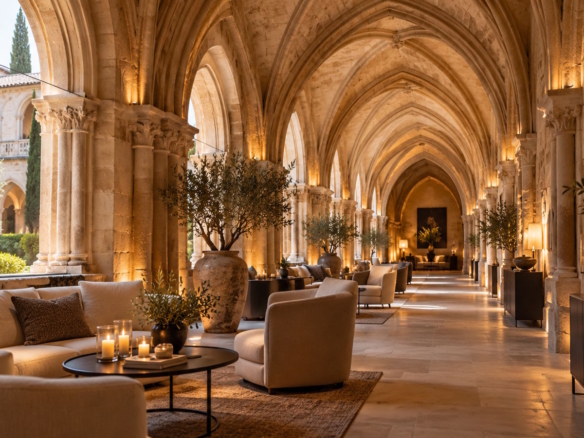
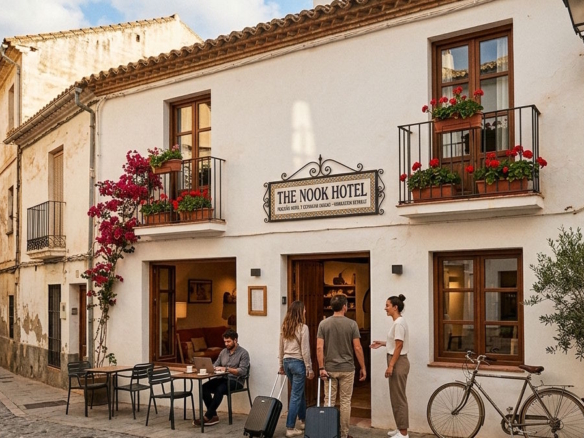
Boutique hospitality aligns directly with this demand. Independent hotels and restaurants can integrate local architecture, regional materials, and culturally rooted concepts in ways that standardized operations cannot replicate.
This creates not just accommodation or dining, but a narrative – one that guests actively engage with and remember.
Personalization and Discreet Exclusivity
Scale limits personalization. Boutique operations, by contrast, operate in environments where individual interaction becomes possible.
With fewer rooms or seats, staff can engage directly with guests, understand preferences, and create tailored experiences. This goes beyond service delivery and builds emotional connection.
Equally important is the aspect of discreet exclusivity. In a highly visible, digitally exposed world, a growing segment of high-value travelers seeks privacy, anonymity, and controlled environments. Boutique properties can offer exactly this.
Unlike large-scale hotels, where guest flow is constant and visibility unavoidable, smaller properties allow for a level of discretion that is increasingly valued. This combination of personalization and privacy creates a powerful positioning for premium clientele.
Technology as an Invisible Enabler
Boutique hospitality is often perceived as traditional or “low-tech.” In reality, successful operators use technology in highly strategic ways.
Modern CRM systems, guest profiling tools, and data-driven insights enable a deeper level of personalization. Preferences from previous stays – from room settings to culinary choices – can be anticipated and seamlessly integrated into the guest experience.
The key difference lies in execution. Technology remains invisible. It supports the experience without defining it.
This approach can be summarized as high-tech infrastructure enabling high-touch hospitality.
Operational Flexibility and Concept Agility
Boutique hospitality offers structural flexibility that large organizations often lack.
Without rigid brand standards or corporate frameworks, operators can adapt quickly to changing market conditions, experiment with new concepts, and collaborate with local partners.
This agility enables boutique businesses to stay relevant and evolve continuously, while large-scale competitors often move more slowly due to organizational complexity.
F&B as a Strategic Anchor
In boutique hospitality, food and beverage is rarely just a supporting service. It often acts as a central pillar of the concept.
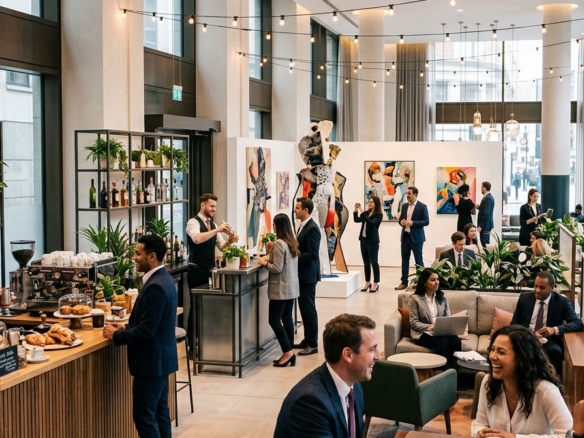
A well-positioned restaurant or bar can attract not only hotel guests, but also local audiences. This transforms the property into a social hub and strengthens its connection to the surrounding community.
By generating independent demand, F&B operations reduce reliance on room occupancy alone and diversify revenue streams. At the same time, they reinforce brand identity and increase overall visibility.
Economic Strength Beyond Scale
Contrary to common assumptions, smaller hospitality concepts are not inherently less profitable.
Boutique operators often achieve strong financial performance by focusing on clearly defined target groups and delivering high-value experiences. This supports premium pricing strategies and higher revenue per room or seat.
At the same time, their uniqueness reduces direct comparability. Standardized hotels are often evaluated primarily on price and location, particularly on online booking platforms. Boutique properties, by contrast, operate outside of strict price competition due to their distinct positioning.
Reduced Dependency on Online Travel Platforms
This differentiation has direct implications for distribution strategy.
Standardized hotels are highly exposed to price comparison on major booking platforms, often leading to margin pressure and dependency on commission-based channels.
Boutique properties, however, benefit from stronger brand identity and direct demand. Guests frequently search for them by name, driven by reputation and experience rather than price alone.
This reduces reliance on online travel agencies and allows operators to retain greater control over pricing and customer relationships.
Relevance for Investors and Sellers
The rise of boutique hospitality is not only a consumer trend. It has direct implications for buyers, sellers, and investors.
For sellers, well-positioned boutique assets can achieve strong market interest due to their differentiation, brand identity, and reduced price sensitivity.
For buyers, boutique concepts offer opportunities to acquire distinctive properties with repositioning potential and scalable narratives.
In an environment where standardized assets face increasing competition, uniqueness becomes a measurable value driver.
Sustainability as an Economic Advantage
Sustainability within boutique hospitality is not limited to environmental positioning. It often translates into tangible economic benefits.
Smaller operations can integrate local supply chains more effectively, working with regional producers, artisans, and service providers. This reduces logistical complexity, shortens supply chains, and can lower operational costs.
At the same time, these practices create authentic narratives that strengthen marketing and brand positioning. Sustainability, in this context, becomes both a cost factor and a value driver.
Conclusion – Boutique Hospitality as a Strategic Model
Boutique hospitality is not defined by size, but by strategic focus.
It prioritizes identity over uniformity, experience over volume, and connection over scale.
As the hospitality market continues to evolve, these qualities are becoming increasingly valuable – not only for guests, but also for operators, investors, and sellers.
In this context, boutique hospitality is not a niche alternative. It is a model that reflects where the industry is moving.
Looking to buy, sell or position a hospitality business?
Hogahero connects curated hospitality assets, operators and opportunities.
Create a listing or explore opportunities