For years, pop-up concepts were often treated as short-term marketing experiments — temporary restaurants, seasonal bars or limited-time retail activations designed primarily to create buzz.
Today, the role of pop-ups inside hospitality appears to be shifting.
Across hotels, restaurants and mixed-use properties, temporary concepts are increasingly being used not only for visibility, but as operational and strategic tools capable of reactivating underused spaces, testing new audiences and generating renewed local attention.
What once felt experimental is gradually becoming part of a broader hospitality playbook.
From Empty Space to Temporary Energy
One of the biggest challenges in hospitality is visible inactivity.
An empty restaurant, an unused rooftop or a partially dormant lobby area quickly affects the perceived energy of an entire property. Guests rarely interpret empty space neutrally. Instead, it can create the impression that a location has lost relevance or momentum.
Pop-up concepts offer a relatively fast mechanism to reverse that dynamic.
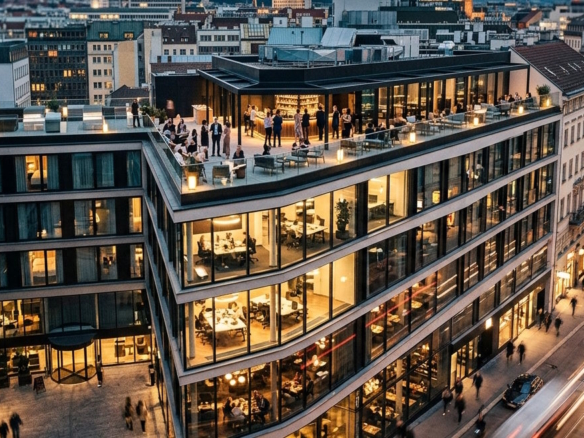
Instead of leaving spaces inactive, operators can temporarily introduce guest chefs, seasonal food concepts, local brands, temporary cocktail bars, curated retail, cultural events, wellness collaborations or tasting experiences.
In many cases, the objective is not long-term permanence, but temporary activation.
The Power of Scarcity
Part of the appeal lies in the temporary nature itself.
Limited-time concepts naturally create urgency and curiosity. Guests often perceive pop-ups as more exclusive, more local and more experience-driven than permanent operations.
This dynamic is particularly relevant in urban hospitality markets where consumers increasingly seek novelty and shareable experiences rather than static concepts.
In this sense, pop-ups function less like traditional restaurants and more like rotating experiential layers within a property.
Testing Without Full Commitment
For operators, pop-ups also reduce risk.
Launching a permanent hospitality concept often requires significant staffing, long-term operational commitment, extensive fit-out investments and high marketing expenditure.
Temporary concepts allow operators to test cuisines, guest demographics, pricing structures, local demand and operational flow before committing to a permanent repositioning strategy.
This flexibility became especially relevant after the COVID-19 period, when many operators were forced to rethink rigid operational structures and fixed-use spaces.
Hospitality as a Flexible Platform
The rise of pop-up culture reflects a broader transformation across hospitality.
Properties are increasingly moving away from rigid single-use operations toward more adaptive environments capable of changing over time.
In this context, hotels are no longer simply accommodation providers. They are becoming platforms capable of hosting multiple layers of experiences, brands and communities simultaneously.
A restaurant space may operate as a breakfast venue in the morning, a coworking environment during the day, an event location in the evening and a pop-up dining concept on weekends.
The property itself becomes more fluid.
The Back-of-House Burden: Why Infrastructure Matters
Despite their flexibility, successful pop-ups rarely happen spontaneously.
Behind the apparent lightness of a temporary concept often sits a surprisingly complex operational structure.
One of the most underestimated aspects is the legal framework. Temporary activations may still require liquor licenses, health approvals, fire safety compliance and, in some cases, zoning or usage approvals when spaces are repurposed outside their original function.
Infrastructure is another critical factor.
Many hospitality spaces are not technically prepared for temporary food and beverage operations. Operators must evaluate whether existing electrical systems, ventilation capacity, water access or grease management systems can support additional equipment and temporary production requirements.
In some cases, pop-ups may only function operationally through “dry prep” systems connected to an existing main kitchen.
Responsibility structures also become increasingly important when external operators are involved.
Cleaning procedures, waste management, staffing interfaces, POS integration and guest communication must be clearly defined. Without operational clarity, temporary concepts can quickly create friction inside the core hotel operation.
Storytelling, Identity and Atmosphere
Temporary concepts also require careful visual positioning.
A successful pop-up should feel distinct enough to create curiosity while still fitting naturally into the overall atmosphere of the property.
This balance is often underestimated.
Without its own identity, a pop-up risks feeling forgettable. But if the concept visually clashes with the hotel itself, the overall guest experience can become fragmented.
The strongest activations use temporary branding, lighting, music, design details and spatial transitions to create a sense of occasion without damaging the property’s core identity.
The Local Activation Factor
One of the strongest advantages of pop-up hospitality is local engagement.
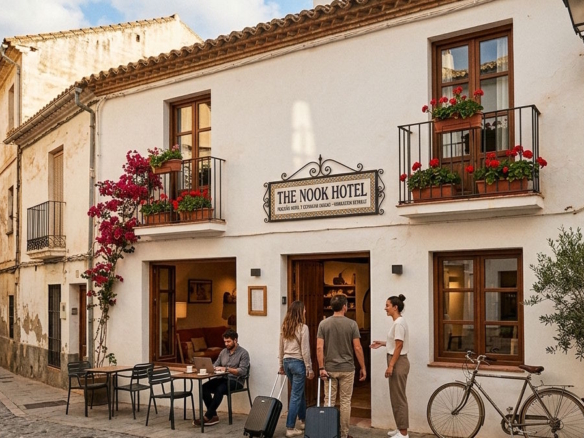
Temporary concepts often attract local audiences who may otherwise never enter the property. This is particularly valuable for urban hotels attempting to position themselves as part of the surrounding neighbourhood rather than isolated guest-only environments.
Collaborations with regional chefs, local brands or cultural operators can strengthen authenticity while simultaneously increasing external traffic.
Properties that succeed in this area often function less like isolated hotels and more like social infrastructure for the surrounding district.
Beyond Food: The Expansion of Pop-Up Logic
While many pop-ups focus on food and beverage, the underlying logic increasingly extends far beyond gastronomy.
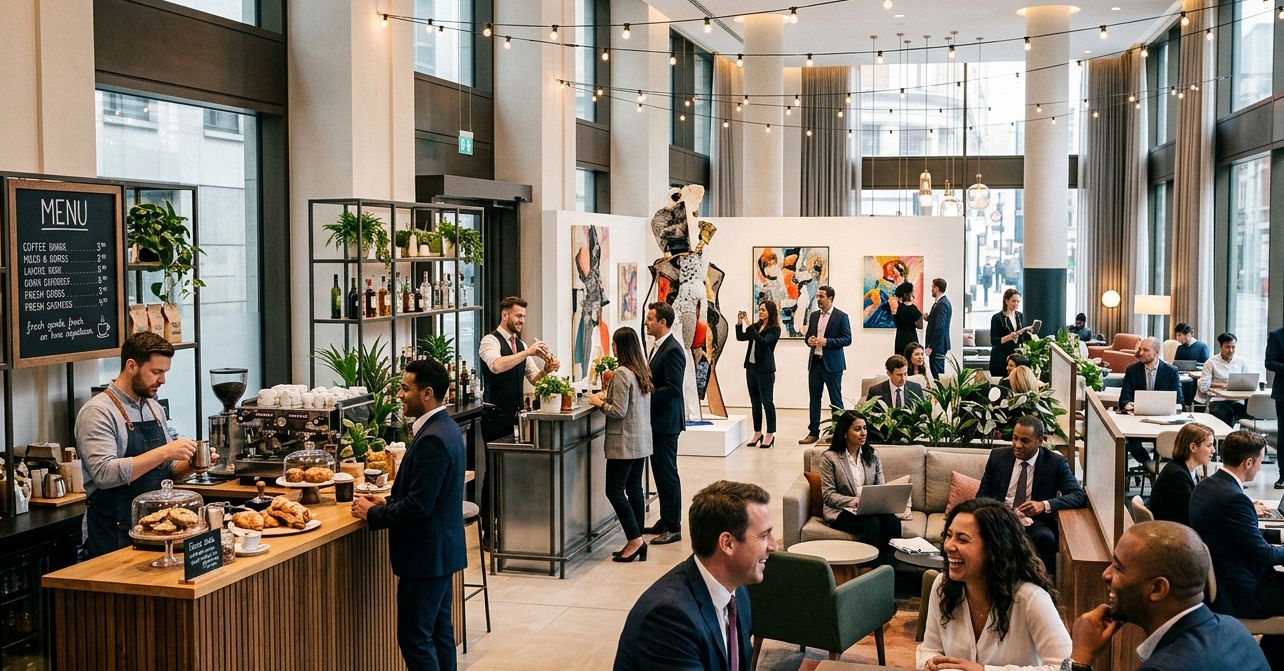
Hotels are beginning to experiment with temporary retail concepts, wellness collaborations, gallery spaces, design showcases and coworking integrations.
An underused lobby corner may temporarily become an e-bike experience zone, a concept store or a curated art installation that attracts entirely different audiences into the property.
This broader approach transforms hospitality spaces into flexible commercial ecosystems capable of continuously evolving around demand patterns and local relevance.
Pop-Ups as Market Intelligence
Temporary concepts are also becoming valuable data tools.
Rather than functioning purely as marketing activations, pop-ups can help operators better understand emerging guest segments, spending behaviour and local demand patterns.
Dedicated reservation systems, event registrations and temporary campaigns often provide access to demographics that traditional hotel channels may not reach effectively.
For some operators, the real long-term value lies less in the temporary revenue itself and more in the audience insights generated through the activation.
The Rise of Ghost and Delivery Pop-Ups
Another emerging development is the rise of delivery-focused or “ghost” pop-ups.
Hotels with underutilised kitchens are increasingly exploring temporary food brands that operate exclusively through delivery platforms during off-peak hours or nighttime periods.
This allows properties to monetise existing infrastructure without requiring additional guest-facing restaurant operations.
In this sense, hospitality assets are increasingly being viewed through the lens of operational flexibility rather than fixed identity.
Risk Management: Protecting the Core Brand
Despite their advantages, temporary concepts are not automatically successful.
One of the greatest risks is inconsistency in quality.
A trendy burger concept with long waiting times, weak service or poor food quality does not remain isolated from the hotel brand. Guests often associate the negative experience with the property as a whole.
Internal communication is equally important.
If hotel staff view the activation as disruptive, confusing or additional workload, guests typically sense this tension immediately. The internal team must become ambassadors of the concept rather than reluctant observers.
There is also growing sensitivity around sustainability.
Poorly executed temporary concepts can create large amounts of waste through disposable materials, short-lived structures and excessive packaging. In an industry increasingly focused on environmental credibility, temporary hospitality must avoid appearing careless or performative.
The “Empty Ending” Problem
One of the most overlooked risks is what happens after the initial excitement fades.
A pop-up that slowly loses energy — fewer guests, tired decoration, visible inactivity — can become more damaging than no activation at all.
Unlike permanent concepts, temporary operations often carry heightened expectations of momentum and atmosphere. Once this energy disappears, the decline becomes highly visible.
For this reason, successful pop-ups typically require a clear exit strategy.
In many cases, it is better to end a concept while demand and attention remain high rather than extending it beyond its natural lifecycle.
The temporary nature itself is often part of the appeal.
Flexibility as the Real Luxury
Ultimately, the growing relevance of pop-up hospitality is not about novelty alone.
It is about adaptability.
At a time when operators face changing guest behaviour, rising operational costs, demand volatility and increasing pressure on asset performance, temporary concepts offer a mechanism for testing, activating and repositioning hospitality spaces with lower long-term commitment.
The future of hospitality may not belong entirely to permanent concepts or temporary ones — but to properties capable of balancing both.
Because in modern hospitality, inactivity is often more dangerous than experimentation.
Hospitality is increasingly moving toward flexible, experience-driven environments designed around activation, adaptability and local engagement.
Hogahero explores the evolving world of hospitality concepts, repositioning strategies and industry trends.
Discover more: Hospitality Trends & Innovation – Hogahero