
Introduction – From Sustainability to System Thinking
Circular gastronomy in hospitality is emerging as a defining operational model for the next generation of food-driven businesses.
What has long been framed as sustainability is increasingly understood as a systemic approach to how resources are sourced, processed, consumed, and reintegrated. Rather than minimizing damage, circular gastronomy in hospitality is designed to create continuous value loops between agriculture, kitchen operations, and the surrounding ecosystem.
The shift moves beyond Net Zero toward Net Positive – a model in which hospitality actively contributes to environmental regeneration while strengthening its own economic resilience.
From Linear Consumption to Circular Systems
Traditional hospitality follows a linear structure: purchase, prepare, serve, discard.
Circular gastronomy in hospitality replaces this logic with a closed-loop system where outputs are reintegrated as inputs. Ingredients are selected with their full lifecycle in mind, waste is treated as a resource, and supply chains are structured to regenerate rather than deplete.
This transforms the “farm-to-fork” concept into a continuous relationship between kitchen and land. Operations move away from extraction toward stewardship, creating a system that is both more efficient and more durable over time.
Seasonal and Local as an Operational Framework
Seasonality within circular gastronomy in hospitality is not a stylistic decision but a structural one.
Local and seasonal sourcing reduces dependency on global supply chains, stabilizes purchasing costs, and increases resilience against volatility in pricing and availability. At the same time, it improves product quality by aligning menus with ingredients at their natural peak.
To extend this system beyond harvest cycles, preservation techniques such as fermentation, pickling, and dehydration become operational tools rather than culinary extras. They allow kitchens to stabilize supply, reduce waste, and maintain consistency across seasons.
Designing Out Waste as an Operational Principle
Food waste remains one of the largest inefficiencies in hospitality.
Circular gastronomy in hospitality reframes waste as a failure of system design rather than an unavoidable outcome. Root-to-stem and nose-to-tail utilization increase yield per ingredient, while smarter menu engineering reduces overproduction.
Beyond visible waste, circular systems address hidden inefficiencies. Energy and water consumption become part of the operational equation. Kitchens that optimize food but ignore infrastructure still operate with structural leakage.
Advanced concepts integrate heat recovery, repurposing excess energy from equipment, and implement intelligent water systems that reduce consumption without compromising performance. The result is a tighter, more efficient operational model.
Technology as a Precision Layer
Technology plays a critical role in making circular gastronomy in hospitality scalable and profitable.
Inventory systems provide real-time visibility, reducing over-ordering and spoilage. Data-driven menu planning aligns purchasing with actual demand patterns rather than forecasts.
In more advanced operations, point-of-sale data is used to map consumption behavior, allowing kitchens to engineer menus based on measurable demand. This reduces waste at the source and improves margin control.
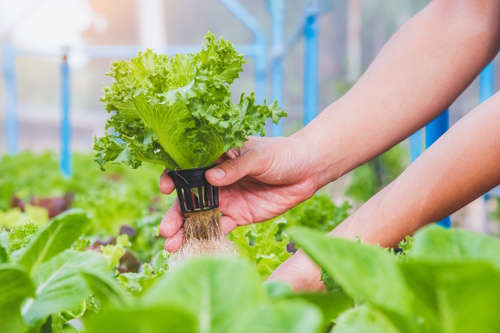
At the production level, innovations such as vertical farming and aquaponics shorten supply chains and stabilize availability, particularly in urban environments. Technology, in this context, is not a replacement for craftsmanship but a tool for precision and control.
Economic Implications and Cost Structure
Circular gastronomy in hospitality is often misunderstood as a cost driver. In practice, it reshapes the cost structure.
While labor input may increase in areas such as preparation and preservation, this is offset by reductions in Cost of Goods Sold and waste disposal expenses. Improved yield, lower purchasing volatility, and reduced dependency on imports create a more stable and predictable financial model.
In addition, circular systems provide differentiation that extends beyond branding. They embed efficiency into operations, making businesses less vulnerable to external shocks and more attractive to long-term investors.
Brand Value, Staff Retention, and Culture
The external narrative of circular gastronomy in hospitality aligns with changing guest expectations, but its internal impact is equally significant.
In an industry facing ongoing labor shortages, purpose-driven operations offer a competitive advantage. Circular systems create environments where craftsmanship, responsibility, and process matter.
This strengthens team engagement, improves retention, and elevates service quality. Employees working within a coherent system deliver more consistent and authentic experiences, directly influencing guest perception and brand strength.
Extending Circularity Across the Entire Operation
Circular gastronomy in hospitality does not end in the kitchen.
Organic waste can be reintegrated into local agricultural systems through composting or structured partnerships, creating reciprocal supply relationships.
Operational materials – from packaging to interior elements – can be selected based on lifecycle performance, prioritizing durability, repairability, and recyclability.
This transforms the business from a collection of processes into an interconnected system where environmental and operational efficiencies reinforce each other.
Implementation as a Phased Transition
The transition toward circular gastronomy in hospitality does not require immediate full transformation.
Most operations begin with targeted adjustments: refining sourcing strategies, improving waste tracking, and aligning menus with available resources. Over time, these measures can be integrated into a cohesive system.
The critical factor is consistency. Circularity is not achieved through isolated actions, but through the alignment of sourcing, production, and infrastructure.
Conclusion – From Concept to Structural Requirement
Circular gastronomy in hospitality represents a shift from consumption to regeneration.
As regulatory pressure, resource scarcity, and market expectations continue to evolve, linear models will become increasingly inefficient and economically fragile.
Businesses that adopt circular principles early are not only reducing environmental impact, but also building more resilient, controllable, and future-ready operations.
In the coming years, the question will not be whether a concept is sustainable, but whether its operational model is structurally circular – or fundamentally outdated.
Looking to buy, sell or position a hospitality business?
Hogahero connects curated hospitality assets, operators and opportunities.
Create a listing or explore opportunities