An alternative path into hospitality investment
Container hotels in hospitality are emerging as a flexible alternative to traditional hotel development. Instead of requiring full-scale real estate investments, these concepts allow founders to enter the market with significantly lower capital exposure.
At Hogahero, we identify this transition as a strategic response to the increasing demand for high-flexibility investment models.
Built from repurposed shipping containers, these projects convert industrial infrastructure into compact, design-driven guest accommodation. What began as an experimental niche is increasingly becoming a viable entry model for hospitality entrepreneurs and landowners.
Container Hotels in Hospitality: A Modular Approach
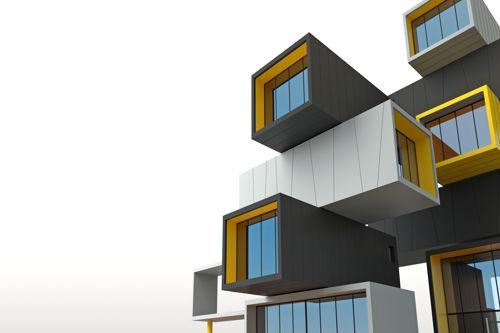
Container hotels are based on standardized units – typically 20- or 40-foot containers – converted into fully functional guest rooms or micro-suites. Their modular nature allows flexible layout configurations, stacking, and phased physical expansion depending on site conditions.
Units can be arranged horizontally or vertically, deployed temporarily or permanently, and connected to infrastructure depending on location and regulatory conditions. While this flexibility primarily defines the construction logic, it provides the foundation for the financial advantages detailed below.
Lower barriers to entry for hospitality founders
From a business perspective, container hotels in hospitality reduce one of the biggest obstacles in hospitality: upfront capital requirements.
Instead of committing to full property acquisition and development, founders can start with a limited number of units, test demand, and expand incrementally. This “build-as-you-grow” model allows for market validation before scaling.
For buyers and investors, this creates a different risk profile. Capital is deployed in phases, operational performance can be evaluated early, and exit strategies remain more flexible compared to conventional hotel assets.
A key advantage lies in the mobility of the underlying asset. Unlike fixed real estate, container units can be relocated, repurposed, or sold individually. This introduces a secondary market dynamic and reduces long-term capital lock-in, strengthening the overall asset-light positioning.
Design, branding and guest perception
The visual language of container hotels has evolved significantly. What was once associated with temporary or industrial use is now increasingly positioned within design-forward and sustainability-driven hospitality.
Architectural concepts range from minimalist urban structures to eco-focused retreats, with strong emphasis on materials, lighting, and landscape integration. This creates opportunities for distinctive branding and highly recognizable concepts.
For operators, this translates into a clear positioning advantage: container hotels can be developed as niche, experience-driven products rather than standardized accommodation.
Target groups and demand patterns
Demand for container hotels in hospitality is not uniform but concentrated in specific segments.
Digital-first travelers, cost-conscious guests, and experience-driven visitors show a higher acceptance of compact, design-oriented accommodation. At the same time, container hotels attract guests interested in sustainability and alternative living concepts.
From a market perspective, this positions container hotels less as mass-market solutions and more as targeted hospitality products with defined audiences.
Operational applications beyond traditional hospitality
One of the strongest advantages of container hotels lies in their adaptability across different use cases.
They are particularly effective in environments where traditional hotel development is economically or logistically challenging. This includes temporary accommodation for events, workforce housing in remote locations, and rapid deployment scenarios in crisis or infrastructure-limited regions.
This versatility expands their relevance beyond tourism and positions them as part of a broader accommodation infrastructure.
Local integration and economic impact
Unlike traditional hotel developments that often operate as standalone entities, container hotels frequently rely on existing local infrastructure.
Without large-scale in-house facilities, they depend on nearby restaurants, cafés, and service providers. This creates indirect economic benefits and integrates the concept more closely into the surrounding environment.
In addition, container hotels can activate underutilized spaces – such as rooftops, vacant urban lots, or coastal transition zones – contributing to local regeneration and visibility in areas undergoing transition.
Limitations and operational considerations
Despite their advantages, container hotels are not without constraints.
Perception remains a key challenge, particularly in higher-end segments where traditional expectations of space and service still dominate. Positioning and design quality therefore play a critical role.
From an operational standpoint, logistics, insulation, and infrastructure requirements must be carefully planned. Transport, installation, and regulatory approvals can introduce complexity, especially in remote or highly regulated markets.
Regulatory classification varies significantly by region. In some markets, container hotels may be treated as temporary structures, while in others they fall under permanent building regulations. This distinction directly impacts permitting, timelines, and feasibility.
Climate conditions also affect performance, requiring investment in insulation, ventilation, and maintenance to ensure guest comfort and long-term durability.
While container projects are often associated with sustainability, the reality is more nuanced. The reuse of shipping containers does not automatically guarantee environmental efficiency, as structural modifications, insulation, and transport can offset some of the ecological benefits. This makes design and engineering decisions critical for achieving credible sustainability outcomes.
Land strategy: ownership vs. flexibility
A defining strategic decision in container hotel development is whether to acquire or lease land.
Leasing enables faster market entry, lower capital commitment, and greater geographic flexibility. It also allows collaboration with municipalities, developers, or temporary land-use projects.
Ownership, on the other hand, supports long-term positioning and value creation, particularly in emerging destinations or growth markets.
For many founders, the ability to combine both approaches represents a significant strategic advantage, while maintaining flexibility in site selection and long-term planning.
Market outlook: from niche to scalable model
Container hotels reflect a broader shift in hospitality toward flexibility, cost-efficiency, and modular thinking.
As cost pressures increase and new travel behaviors emerge, asset-light models are gaining relevance. Technological integration, sustainable design, and hybrid usage concepts are likely to further strengthen this segment.
Rather than replacing traditional hotels, container-based concepts expand the spectrum of hospitality models – particularly for founders seeking alternative entry strategies.
Looking to buy, sell or position a hospitality business?
Hogahero connects curated hospitality assets, operators and opportunities.
Create a listing or explore opportunities