Hospitality websites have never looked better.
Cinematic drone footage, carefully curated photography, immersive branding, refined typography and highly polished storytelling now dominate large parts of the industry’s digital landscape. In many cases, hotel websites resemble luxury magazines more than booking platforms.
And that is precisely where the industry’s newest challenge may be emerging.
While hospitality branding has become increasingly sophisticated, many travellers are quietly searching for something far simpler — clarity, relevance, trust, practical answers and emotional connection.
The issue is not that hospitality marketing has become too professional. The issue is that large parts of the industry have become visually impressive while simultaneously growing harder to emotionally differentiate.
As competition intensifies globally and traveller behaviour continues to evolve, many hospitality brands may now be facing a more uncomfortable question:
What happens when every hotel begins to look, sound and market itself the same way?
The Rise of “Perception Hospitality”
A growing number of hospitality projects are now designed not only for guests, but also for visibility itself.
Architecture is expected to be instantly recognisable online. Restaurants are increasingly developed with visual storytelling in mind. Hotels invest heavily in curated aesthetics, refined brand language and digital positioning strategies built to generate attention across social media, editorial platforms and luxury travel ecosystems.
In many markets, this approach works remarkably well. Strong branding can accelerate awareness, support pricing power and attract investors, operators and collaborations. Smaller boutique concepts can suddenly compete on a global stage through visibility alone.
But the industry is also entering a more complicated phase.
Because visibility and operational resilience are not always the same thing.
The Glossy Vacuum
One of hospitality’s growing contradictions is that many brands have never looked better — yet rarely felt more distant.
The industry has invested enormous resources into polished photography, cinematic videos and carefully controlled brand aesthetics. Websites are increasingly filled with highly engineered language centred around immersive experiences, authentic escapes, elevated living and destination-driven lifestyle narratives.
The result is visually impressive communication — but often emotionally flat communication.
Perfection does not automatically create connection.
In fact, the smoother and more polished many hospitality platforms become, the harder it can be for guests to sense the actual experience behind them.
Modern travellers increasingly search for atmosphere, personality, honesty and emotional resonance. They want to understand not only how a hotel looks, but how it actually feels to stay there.
Ironically, some hospitality brands risk losing this emotional accessibility by over-curating every aspect of their digital presence.
At some point, a hotel website stops feeling like hospitality and starts feeling like advertising.
The Risk of Narrative-Driven Expansion
During years of cheap capital and aggressive tourism growth, many hospitality brands expanded rapidly.
Luxury concepts multiplied across emerging destinations. Lifestyle hospitality became one of the industry’s dominant narratives, while mixed-use developments, branded residences and experience-driven projects accelerated globally.
At the same time, hospitality marketing evolved into a highly sophisticated ecosystem built around storytelling, aspiration and digital reach.
The challenge is that market conditions are changing.
Financing costs remain elevated in many regions. Energy prices continue to pressure operations. Labour shortages persist across parts of the industry. Consumer behaviour has become less predictable, while geopolitical instability increasingly impacts travel flows.
Under these conditions, visibility alone is no longer enough.
Projects that perform well online do not automatically perform well operationally. A strong launch campaign cannot permanently compensate for weak positioning, inflated pricing structures or unrealistic expansion strategies.
Social Media Has Changed Hospitality Psychology
The hospitality industry has always relied on image and prestige. But social media has amplified this dynamic dramatically.
Today, success is increasingly measured through visibility metrics, cinematic branding, architectural visuals, founder visibility and carefully curated digital identity.
What remains largely invisible are the operational realities behind the scenes — staffing pressures, debt structures, utility costs, maintenance, seasonality and margin compression.
This creates a dangerous imbalance for parts of the industry.
In some cases, hospitality businesses risk optimising for attention rather than sustainability.
The Audience Gap Nobody Talks About
One of hospitality’s quieter contradictions is that some of the industry’s most financially valuable audiences are often the least socially visible ones.
Across many markets, affluent travellers, experienced investors and older high-net-worth demographics remain surprisingly detached from the social media ecosystems that increasingly dominate hospitality marketing strategies.
Many travellers over 50 — including highly affluent guests — are not actively participating in Instagram culture, influencer trends or viral hospitality content at all.
Yet they continue to represent enormous purchasing power across luxury travel, wellness tourism, long-stay hospitality, premium dining and multi-generational travel.
This creates a growing disconnect inside parts of the industry.
Hotels often optimise heavily for digital aesthetics, platform engagement and visibility metrics while unintentionally becoming less relevant to audiences primarily searching for trust, comfort, professionalism and substance.
For many of these guests, the decision-making process looks entirely different.
They are less interested in whether a destination is trending online and far more interested in whether a property genuinely delivers what it promises.
Visibility matters.
But hospitality has always depended on understanding people — not just platforms.
Why So Many Hospitality Brands Now Sound The Same
One of the hospitality industry’s quieter problems is that many brands are beginning to lose their distinct voice.
Across large parts of the sector, websites and campaign language increasingly follow the same formula. Aspirational luxury, curated experiences, immersive escapes, elevated wellness and destination-driven lifestyles now dominate large parts of hospitality communication.
In moderation, these concepts are effective. But repeated across hundreds of brands, they gradually create a landscape where everything starts sounding interchangeable.
Part of this is driven by digital visibility itself.
Marketing departments, agencies and SEO strategies operate under enormous pressure to optimise discoverability, search rankings, engagement metrics and platform performance. Content is increasingly shaped around algorithms, keyword structures and highly standardised branding frameworks.
The result is professionally polished communication — but not always memorable communication.
In some cases, hospitality websites begin to feel less like reflections of real properties and more like carefully engineered visibility systems.
Ironically, the more brands optimise for digital performance, the harder genuine differentiation becomes.
The “Oldtimer” Problem
Many hospitality websites today resemble beautifully maintained classic cars.
Elegant. Familiar. Professionally polished.
But fundamentally built for a different era.
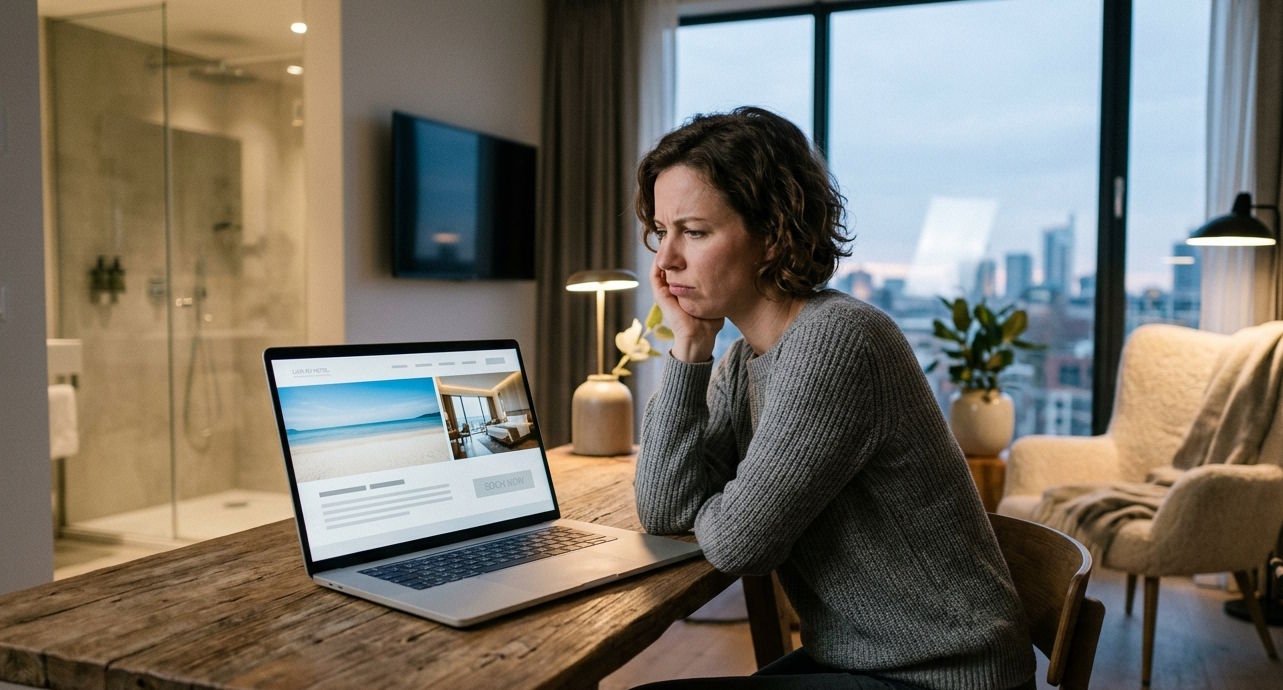
A surprising number of hotel websites still operate with the logic of 2018 — static imagery, generic destination guides, predictable marketing copy and one-directional communication focused entirely on aspiration.
But modern travel behaviour has changed dramatically.
Today’s travellers expect flexibility, transparency, relevance and real-time usefulness. They compare destinations faster, research more critically and increasingly make emotional trust decisions within seconds.
A website is no longer a digital brochure.
It is an ongoing conversation.
And when that conversation feels outdated, overly scripted or disconnected from current travel realities, trust begins to erode.
Many guests are no longer searching for adjectives.
They are searching for answers.
Search For Answers, Not Adjectives
Hospitality marketing departments love adjectives.
Guests love clarity.
While websites continue describing “unforgettable luxury experiences” and “exceptional comfort”, travellers are often asking much simpler questions:
Can I work properly from this hotel?
Is the area peaceful or overcrowded?
Is the concept actually suitable for longer stays?
Is the breakfast genuinely worth the price?
Is the experience authentic — or heavily staged?
Is this property aligned with the way people travel today?
Increasingly, transparency itself may become a premium feature.
Hotels willing to communicate with greater honesty and specificity may ultimately attract more aligned guests, stronger loyalty and better long-term positioning.
Because individuality is rarely created through design alone.
It is created through clarity, personality and confidence in what a property truly is — and what it is not.
Beyond Beautiful Websites
For many hospitality brands, the next competitive advantage may not come from even more polished branding, but from becoming more relevant, responsive and context-driven.
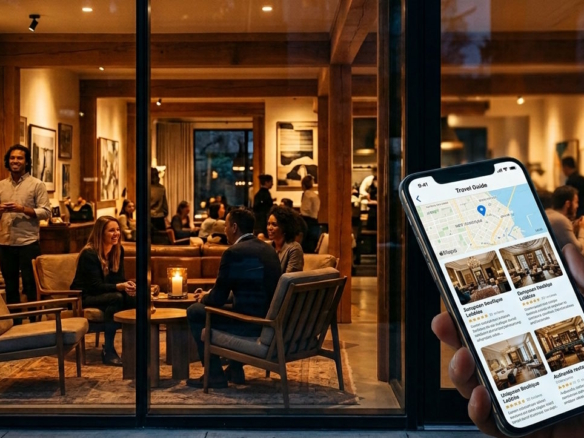
Travellers increasingly want to understand not only where they are staying, but also what is happening around them — emerging food scenes, cultural developments, local events, destination shifts, seasonal realities and changing travel dynamics.
In other words, guests are increasingly looking for living ecosystems rather than static digital brochures.
This creates new opportunities for hospitality marketing teams.
Not necessarily to communicate more — but to communicate differently.
Editorial storytelling, intelligent PR, locally relevant insights, behind-the-scenes perspectives and dynamic destination-driven content may become increasingly valuable in an industry where many traditional marketing structures already look and sound remarkably similar.
The future of hospitality communication may not belong to the loudest brands.
But to the brands capable of remaining relevant, recognisable and genuinely connected to how people actually travel today.
Why Discipline May Become Hospitality’s Competitive Advantage
Ironically, some of the strongest hospitality operators may be the least visible ones.
Across the industry, many resilient companies continue prioritising operational discipline, careful market selection, measured expansion, adaptable business models and long-term financial resilience.
These qualities may not generate viral attention, but they often create stronger long-term assets.
As the hospitality market becomes increasingly saturated with concepts competing for visibility, investors and operators may begin placing greater value on fundamentals again.
Not every destination can absorb another luxury concept. Not every lifestyle brand can scale internationally. And not every visually impressive project is operationally sustainable.
Hospitality Is Becoming A Hybrid Industry
One of the most interesting shifts in recent years is that hospitality companies are increasingly behaving like media brands.
Operators now invest in storytelling, editorial partnerships, social visibility, founder branding and digital ecosystems alongside traditional hotel operations.
This is unlikely to disappear. In fact, visibility will probably become even more important in the years ahead.
But the next phase of hospitality may belong to companies capable of balancing both worlds — strong brand positioning and operational substance.
Because ultimately, visibility may open doors.
But long-term hospitality value is still built behind the scenes.