
US motel investment is gaining renewed attention as a unique opportunity within the hospitality sector.
Along highways, coastal roads and at the edges of towns across the United States, motels have long been part of the landscape. They were never designed to impress. They were designed to function – to offer a simple, accessible place to stop, rest and continue the journey.
For decades, that was enough.
But over time, the environment around them began to change. Travel patterns shifted. Guest expectations evolved. Operating costs increased. And what once represented convenience gradually lost its relevance in a market that moved towards experience, branding and differentiation.
Many motels were left behind in that transition.
Years of limited reinvestment, combined with increasing competition from both standardized hotel chains and alternative accommodation models, placed growing pressure on traditional roadside properties. In many cases, performance declined not because of location or structure – but because the concept itself no longer matched the market.
From the outside, this might look like the slow disappearance of an entire asset class.
But that is only part of the story.
A Shift That Is Easy to Miss
While a large number of motels continue to struggle, a different development is taking place – one that is far less visible, but far more consequential.
Selected properties are being revisited.
Not as outdated businesses, but as underutilized assets.
Across the United States, investors and operators are beginning to look at motels through a different lens. What was once defined by limitation is increasingly being understood as flexibility. The very simplicity that once made motels predictable now allows them to be reinterpreted.
This is not a traditional comeback.
It is a repositioning.
From Standard to Story
In a market saturated with uniform hotel products, differentiation has become one of the most valuable currencies in hospitality.
Motels, in their original form, were never designed around identity. Yet this is precisely what makes them interesting today. Their scale, layout and often distinctive locations offer a foundation that can be shaped into something far more individual than most new developments allow.
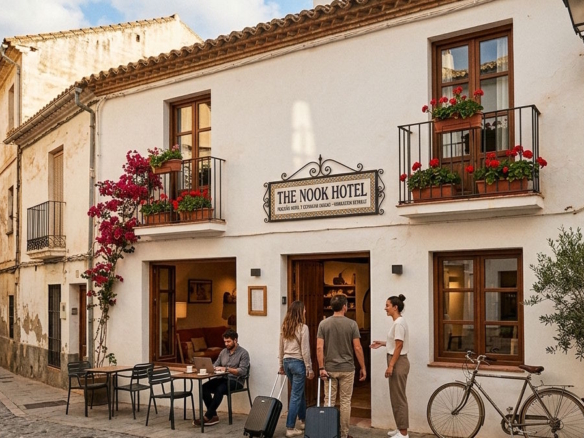
Across the country, a growing number of properties are being transformed into design-led, experience-driven concepts. Some embrace a retro aesthetic, others take a minimalist or lifestyle-oriented approach. What they share is a clear shift away from function towards narrative.
Travelers are responding accordingly.
The demand for accommodation is no longer defined purely by price and availability. Increasingly, it is shaped by character, atmosphere and the overall experience of a place. In that context, the motel becomes less of a compromise and more of a deliberate choice.
What Makes a Motel Worth Transforming
Not every motel represents an opportunity.
But the right one often already contains the blueprint for something entirely different.
Location remains the single most decisive factor. Motels situated near urban centers, employment hubs or along established travel corridors offer a foundation that goes far beyond their current use. Accessibility, proximity to infrastructure and surrounding demand drivers determine whether a property can be repositioned successfully.
Equally important is the underlying structure. Motels are typically composed of individual units, each with its own bathroom and direct access. This layout significantly reduces the complexity of transformation and allows for faster repositioning.
Another often overlooked advantage lies in land use. Many motels are built on relatively large plots with low density. Extensive parking areas and underutilized outdoor space provide flexibility for expansion, additional units or entirely new concepts.
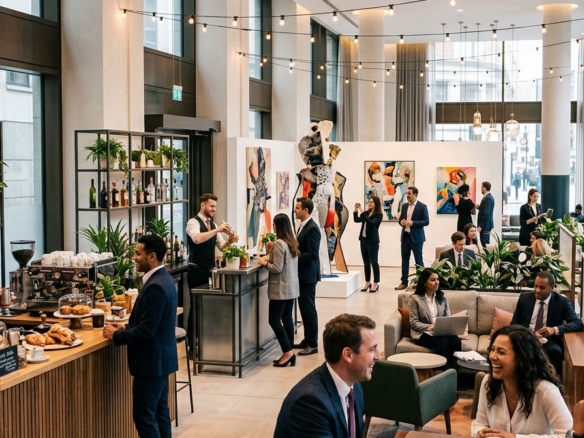
Existing amenities further strengthen the repositioning case. Pools, reception areas or unused common rooms can be reimagined into social spaces, co-working environments or community-driven concepts.
Finally, infrastructure plays a decisive role. Properties that already provide utilities per unit offer a significant cost advantage when compared to new developments or more complex conversions.
Not every motel should be transformed.
The strongest opportunities combine location, structure and demand alignment.
An Accessible Entry Point for Investors
Beyond repositioning potential, motels offer something increasingly rare in today’s market: accessibility.
Compared to full-service hotels, entry barriers are often significantly lower. Operational complexity is reduced, staffing requirements are minimal and management structures tend to be lean. This makes motels particularly attractive for first-time investors entering the hospitality sector.
In many cases, a single property becomes a starting point. Investors gain operational experience, test repositioning strategies and gradually build a portfolio. This “roll-up” approach – acquiring and upgrading multiple assets over time – has become a recognizable pattern in the segment.
Financing structures also play a role. In the United States, seller financing is not uncommon in transactions involving smaller hospitality assets. For sellers, this can accelerate deal execution. For buyers, it lowers initial capital requirements and facilitates entry into the market.
In that sense, motels are not only transformation candidates – they are often entry vehicles.
International Investors and the E2 Opportunity
For a growing number of international investors, motel acquisitions in the United States are not only a business decision, but also a strategic one.
Under the E2 Investor Visa framework, foreign nationals from eligible countries can obtain residency rights by investing in and actively operating a U.S.-based business.
In this context, smaller hospitality assets such as motels often align well with the requirements. Compared to large-scale hotel developments, they allow for a more accessible entry point while still representing a real, operating business.
For investors seeking both operational involvement and geographic flexibility, this creates a dual incentive:
the opportunity to build a business and establish a presence in the United States at the same time.
As with any investment structure, regulatory requirements and individual circumstances must be carefully assessed. However, the overlap between hospitality assets and visa-based investment strategies is becoming increasingly visible.
Beyond Hospitality: The Housing Dimension
In an increasing number of cases, the future of a motel is no longer tied to hospitality at all.
Across the United States, the conversion of hotels and motels into residential units has accelerated significantly in recent years. This shift is closely linked to a structural challenge affecting many regions: the shortage of affordable housing.
Motels are particularly well suited for this transition. Their room-based layout, existing infrastructure and relatively accessible acquisition costs allow for comparatively fast and efficient conversion into studio apartments or micro-living concepts.
In several cities, former motels are already being repositioned as workforce housing or affordable residential units, reactivating properties that previously struggled to perform.
However, such transformations are not purely a question of feasibility. Local zoning and regulatory frameworks ultimately determine what a property can become. As a result, investors are increasingly targeting locations where municipalities are open to adaptive reuse and residential conversion.
New Concepts and Specialized Operators
The repositioning of motels is no longer an isolated phenomenon. A growing number of specialized operators and developers have built their business models around exactly this transformation process.
Companies such as Life House and Salt Hotels have demonstrated how existing properties can be turned into design-driven hospitality concepts through a combination of branding, technology and targeted renovation.
At the same time, successful repositionings increasingly extend beyond the building itself. Outdoor areas, once dominated by parking, are being reimagined as social hubs – hosting food trucks, open-air events or community-driven experiences that attract both travelers and local audiences.
This shift reflects a broader trend: value is no longer created solely through accommodation, but through the ecosystem around it.
An Asset at the Intersection
The repositioning of motels sits at the intersection of multiple structural forces.
On one side, there is a segment of hospitality assets that no longer performs under its original concept. On the other, there is increasing demand for alternative uses – whether within hospitality or beyond it.
For investors, this creates a dual pathway.
A property can be repositioned within its original category, transformed into a differentiated hospitality concept. Or it can be redefined entirely, transitioning into residential, hybrid or mixed-use formats.
The decision is no longer limited to improving performance.
It is about identifying the most valuable future use.
Selected Motel Opportunities
At Hogahero, we are currently observing a growing number of motel properties entering the market – many of them positioned exactly at this intersection of hospitality and alternative use.
Rather than finished products, these assets represent starting points. Opportunities to rethink, reposition and redefine. This is why US motel investment is increasingly moving into focus for both operators and investors.
Conclusion
The traditional motel, as it once existed, may gradually fade from view.
But the underlying asset is not disappearing.
It is being reinterpreted.
In the right context, with the right perspective, it offers something that is increasingly rare in today’s hospitality landscape:
A foundation that is already built – and still open to change.
If you are currently considering the sale or repositioning of a hospitality asset, Hogahero offers a curated environment to present your property to a targeted audience of investors and operators.
List your hotel, motel or hospitality asset with us here.