HOGAHERO
  • Home
  • Properties
    • Featured Listings
    • Off-Market Portfolio
    • Sell a Property
    • For Investors
  • Careers & Talent
    • Find Jobs
    • Post a Job
  • Magazine
    • Hospitality Trends & Innovation
      • Concepts & Innovation
      • Sustainability
      • Food & Beverage Culture
    • Business & Growth
      • Succession & Sales
      • Branding & Marketing
      • Management & Strategy
    • Travel & Culture
      • Global Insights
      • Destination Dining
    • Trade Shows & New Hospitality Products
  • My Dashboard
    • Create account
    • Login
    • Add Property
  • Contact
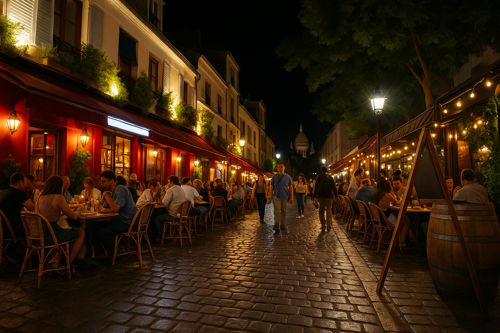
Evening view of a European cobblestone street lined with lively outdoor restaurant seating, warm lights, mature trees, and pedestrians enjoying a relaxed dining atmosphere.

Turning Streets into Destinations: How Gastronomic Quarters Like Tashkent’s Taras Shevchenko Street Are Shaping Urban Hospitality

Global Insights

Across the globe, cities are discovering a quiet yet potent strategy for urban revitalisation: the gastronomic street. These curated culinary corridors are transforming overlooked districts into vibrant, walkable destinations where food, culture and community intersect. This shift in urban vision is reshaping hospitality at street level, turning once transitional spaces into anchors of identity and experience.

From Urban Blight to Culinary Appeal

A compelling example is the transformation of Taras Shevchenko Street in Tashkent. What once functioned as a standard central artery has evolved into a 24-hour culinary zone. Car lanes became pedestrian space, granite paving replaced asphalt and seating, lighting, Wi-Fi access and designated social areas were added to support public interaction. The next development phase centres on landscaping, terraces and smart urban furniture, building a continuous pedestrian rhythm with controlled vehicle access to preserve atmosphere and safety.

A Global Phenomenon with Local Signatures

Tashkent is not an isolated case. Across continents, gastronomic streets emerge as catalysts of urban identity. Seminyak’s Eat Street in Bali grew organically into a culinary microcosm of cafés and bars with relaxed energy. Copenhagen’s former industrial quarters now house innovative restaurants without erasing their architectural past. Taipei’s Shilin Night Market proves that informal formats can become cultural mainstays, drawing visitors through authenticity and sensory diversity. Barcelona continues to demonstrate how tightly woven alleyways filled with tapas bars sustain evening economies and local storytelling. In Singapore, formalised hawker districts show how heritage dining can coexist with structure, hygiene and high throughput.

Despite different contexts, these districts share a core principle: hospitality becomes a spatial narrative, not merely a commercial offer. Food is placement, culture, memory and movement.

Designing Culinary Districts That Endure

Successful gastronomic streets require more than widened pavements and decorative lighting. They demand an integrated model: walkability, seating, shade, lighting design and publicly visible craft. A clear thematic identity supports positioning, while regular programming and seasonal vendors sustain excitement. Pop-up spaces reduce entry barriers and allow new restaurateurs to test concepts with minimal risk.

Cultural extension matters too. Music, murals, bookshops and micro-galleries widen dwell time and emotional attachment. Infrastructure must support ambition: shared waste stations, coordinated hygiene schedules, composting systems and digital layers for menus and reservations.

Balancing Energy and Responsibility

Culinary streets generate foot traffic, but they also generate friction. Noise discussions require transparent frameworks. Waste must be managed with intention, not reaction. Public transport links and peripheral parking reduce congestion. Climate resilience matters through retractable awnings, shade structures and convertible indoor or outdoor seating.

Gentrification risks must be acknowledged. As such districts gain attention, larger chains may displace independent operators. Incentives for local businesses, curated tenancy and rent guidance help protect narrative authenticity. Security measures, from lighting to data systems, must remain accountable to public trust.

A Launchpad for Hospitality Entrepreneurs

These culinary corridors are more than dining clusters. They represent entry points for new restaurateurs, small producers and creative operators who need visibility and manageable operational footprints. Shared kitchens, modular bars, micro-pastry stations and design-consistent carts allow a diversity of concepts to emerge.

For hotels, co-working cafés, event hosts and artisan markets, these districts offer adjacency to ready audiences. They become economic engines and cultural placeholders, anchoring neighbourhood identity and drawing locals as well as travellers back into the street.

A Flavorful Future for Urban Hospitality

From Tashkent’s structured initiative to Taipei’s late-night rhythms and Europe’s layered food lanes, gastronomic streets are redefining urban experience. They invite cities to become destinations through one universal connector: taste. Hospitality evolves from interior to exterior, from venue to avenue. As more cities embrace the intersection of cuisine, culture and public space, those who understand the potential of culinary districts will help shape the next chapter of urban hospitality.
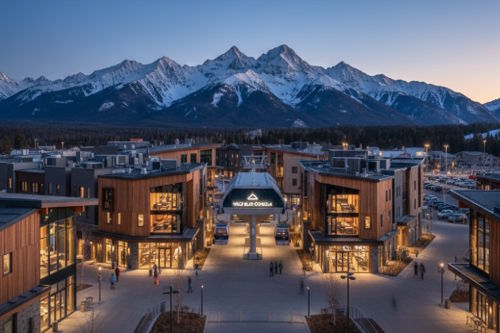
Modern ski resort base village at twilight, featuring sustainable wooden architecture, a glowing gondola station, and integrated mixed-use infrastructure in a mountain landscape.

Ski Villages Reimagined – Hospitality Development in Transition

Global Insights

Across the United States, ski resorts are entering a new era of redevelopment. No longer defined by luxury hotels alone, base villages are being reshaped by demands for workforce housing, infrastructure, and stronger ties to local communities. From Colorado to Utah and California, the way American ski villages evolve today is setting the tone for hospitality development worldwide.

Colorado: From Steamboat to Snowmass

In Colorado, the scale of redevelopment illustrates the stakes. Steamboat’s “Full Steam Ahead” project has transformed the base area, anchored by the Wild Blue Gondola – the longest and fastest in North America. While the lift itself expands capacity, debates around transit, parking, and infrastructure underscore how resort growth now depends on public-private partnerships.

Snowmass, meanwhile, represents a billion-dollar masterplan blending high-end residences, hotels, and retail spaces. Developed by East West Partners and Aspen Skiing Company, the project also integrates workforce housing solutions in the surrounding valley. This duality – luxury investment paired with obligations to community housing – has become emblematic of the Colorado model.

Utah: The Ambitious Mayflower at Deer Valley

Utah’s Deer Valley is home to one of the most ambitious projects in the country. The Mayflower development, directly connected to Deer Valley’s lift system, is designed as a new base village with more than 800 hotel rooms, 1,700 residences, and an estimated 600 workforce housing units. Backed by Extell Development and Alterra, the expansion is reshaping the entire Heber Valley.

Unlike incremental upgrades, Mayflower is essentially building a new town. For investors and operators, it shows that large-scale resort projects in the U.S. can only move forward when they address housing, infrastructure, and community integration head-on.

California: Balancing Ambition with Community

In California, Mammoth Mountain and Palisades Tahoe illustrate the balancing act between vision and public acceptance. Mammoth is still refining its plans for a redesigned main base area, subject to extensive environmental review. Palisades Tahoe, after years of litigation and community opposition, scaled down its redevelopment, prioritized employee housing, and launched the Base-to-Base Gondola linking its two valleys.

These cases highlight a broader truth: growth in U.S. resorts is no longer linear. It is negotiated, revised, and increasingly dependent on alignment with community priorities.

Beyond Luxury: Taos and Big Sky

Some resorts are embracing entirely new models. Taos Ski Valley in New Mexico, as a certified B-Corp, demonstrates how social and environmental responsibility can be embedded into resort business models. Its investments in employee housing and sustainability programs have made it a case study in purpose-driven development.

Big Sky in Montana is pursuing a ten-year masterplan known as “Big Sky 2025,” combining lift expansion and base-area improvements with workforce housing initiatives supported by local non-profits and public partners. The message is clear: long-term success requires collaboration beyond the resort operator itself.

Global Perspective: Lessons Beyond the U.S.

While the United States leads with large-scale redevelopments, similar questions are being asked elsewhere. In Switzerland, Andermatt has transformed from a quiet military base into a luxury resort town, blending investment with cultural programming. In Japan, billion-dollar projects such as Myoko’s new resort are raising concerns about cultural identity and off-season sustainability. In China, new villages like Lake Songhua are being built as complete communities, while massive urban snow centers redefine what a ski resort can be.

The comparison underscores how U.S. resorts stand out for embedding workforce housing and public infrastructure into their plans. Europe leans toward integrating heritage villages, while Asia focuses on rapid scale and technology. Together, these examples highlight a global truth: the future of hospitality depends not just on what is built, but on how it serves both visitors and communities.

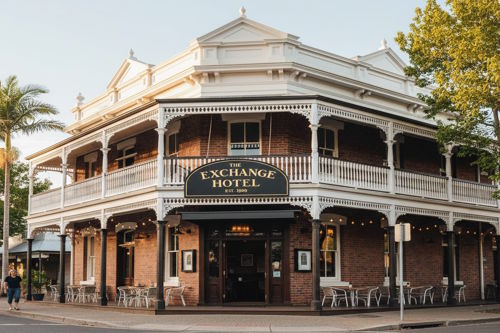
A charming historic Australian regional hotel with classic colonial architecture and a wrap-around veranda, representing hospitality investment and boutique property development in New South Wales.

Focus Australia: Regional Hotel Markets on the Rise

Global Insights

According to The Hotel Conversation, the recent sale of the Exchange Hotel in Kyogle, New South Wales, highlights the continued investor appetite for regional hospitality assets in Australia. The transaction, managed by HTL Property, attracted strong interest and resulted in a successful sale to a newcomer in the hospitality sector.

Lessons from the Exchange Hotel in Kyogle

The Exchange Hotel stood out thanks to its diverse income streams, established annual revenues, and development potential. For many buyers, such a mix represents more than a property — it is both a lifestyle opportunity and a long-term investment.

The fact that the new owner is a first-time entrant to the sector illustrates a wider trend: regional hotels are no longer just the domain of established operators. Fresh players are stepping in, drawn by affordability, community value, and the chance to build a distinct hospitality business.

Regional Growth and Lifestyle Shifts

Kyogle lies in the Northern Rivers, not far from Byron Bay and the Gold Coast. Like many towns across Oceania, the region benefits from “tree change” and “sea change” migration trends. Families and entrepreneurs are leaving metropolitan areas in favour of lifestyle-rich communities with lower entry barriers.

This demographic shift is reshaping regional markets and increasing the demand for hospitality businesses that can serve both residents and visitors. From pubs with accommodation to boutique hotels, properties in secondary locations are proving resilient and attractive.

Broader Trends in Oceania

Across Australia and New Zealand, similar patterns are visible. Regional and coastal hotels, motels, and guesthouses are drawing attention from investors who see their potential to serve tourism flows while tapping into lifestyle-driven demand.

Unlike high-end resorts that primarily target international guests, many smaller assets thrive on domestic markets. This balance has proven advantageous, offering stability even in uncertain times.

Opportunities for Buyers and Sellers

For buyers, Oceania’s hospitality sector offers possibilities ranging from heritage pubs to boutique guesthouses — often with scope for redevelopment or diversification.

For sellers, the Kyogle case shows that well-positioned assets can generate competitive interest and achieve outcomes reflecting both commercial and lifestyle value.


Source: The Hotel Conversation

Vietnam’s Rising Appeal in the Hospitality Market

Vietnam’s Rising Appeal in the Hospitality Market

Global Insights

In recent years, Vietnam has emerged as one of Southeast Asia’s most dynamic tourism markets. With record-breaking visitor numbers and an increasingly diverse traveler profile, the country is quickly becoming a prime location for both hospitality investments and property sales. From bustling cities to untouched coastal retreats, Vietnam offers opportunities that cater to every segment of the industry.

Why Vietnam Is Attracting Global Attention

Vietnam welcomed over 17.5 million international visitors in 2024 – a 39.5% increase compared to the previous year. A significant portion of this growth came from China, with arrivals soaring by over 200%. Improved flight connections and visa-friendly policies have made Vietnam more accessible than ever, not only for Asian travelers but also for long-haul visitors.

While Thailand has long dominated the region, rising costs and shifting travel preferences have prompted many tourists – including a growing number of Europeans – to choose Vietnam instead. The country’s competitive pricing, vibrant culture, and expanding luxury segment position it as a serious contender for regional tourism leadership.

Opportunities for Sellers and Buyers

For property owners, now is the time to act. Demand for boutique hotels, beachfront resorts, and city-based serviced apartments is growing, with investors actively seeking opportunities in Hanoi, Ho Chi Minh City, Da Nang, and emerging coastal destinations. Sellers benefit from Vietnam’s strong market momentum and international interest, while buyers can still secure properties at prices significantly lower than in other Asian hotspots.

Vietnam’s hospitality market is also supported by a growing domestic tourism sector. Middle-class Vietnamese travelers are spending more on high-quality experiences, adding stability to the industry and reducing dependence on seasonal international markets.

The Competitive Edge

One of Vietnam’s unique advantages is the higher prevalence of English proficiency compared to some neighboring countries, making business operations and guest communication smoother for international investors. Combined with favorable government policies, improving infrastructure, and a strategic location in Southeast Asia, Vietnam offers a long-term growth path for hospitality ventures.

Conclusion

Vietnam is no longer an emerging market – it is a rapidly maturing destination with strong potential for sellers and buyers alike. Whether you are looking to sell your hospitality property at peak market interest or to enter one of Asia’s most promising investment landscapes, Vietnam offers the perfect setting for your next move.

Ready to make your move? Whether you’re selling a hotel or restaurant in Vietnam—or searching for your next hospitality investment—Hogahero is your global marketplace. List your property today or explore our latest opportunities.

Hard Rock Hotel Malta: A Five-Star Landmark Set to Redefine Luxury in the Mediterranean

Hard Rock Hotel Malta: A Five-Star Landmark Set to Redefine Luxury in the Mediterranean

Global Insights

Malta is preparing to welcome a striking addition to its luxury hospitality landscape. Scheduled to open in 2026, the Hard Rock Hotel Malta is set to become a landmark property in St. George’s Bay – a project that aims to strengthen the island’s position as a premium Mediterranean destination.

With an investment of around €300 million, the lifestyle resort will feature 394 rooms, including several exclusive suites with private pools. Guests can look forward to twelve distinct dining concepts, expansive pool areas, a high-end spa, fitness facilities, and versatile event spaces.

Historic Architecture Meets Contemporary Design

Part of the resort will be integrated into a building originally constructed in the 19th century as British military quarters. This historical backdrop will be paired with contemporary design and the signature Hard Rock brand elements, blending cultural authenticity with modern comfort and global lifestyle appeal.

A Tourism Magnet in a Growing Market

In recent years, Malta has evolved into a multifaceted destination – attracting culture enthusiasts, sunseekers, and business travelers alike. The resort’s location in St. George’s Bay offers direct access to beaches, entertainment venues, and a growing gastronomy and events scene.

For the European hospitality industry, this project sends a clear message: international brands continue to invest in high-quality destinations within the EU that combine accessibility with unique cultural character.

Sustainability in Focus

According to project details, the hotel is designed to meet LEED Silver certification standards. This globally recognized benchmark highlights energy-efficient construction, sustainable material choices, and environmentally conscious operations – factors increasingly seen as essential in Europe’s premium hospitality sector.

A Signal for the Industry

With its powerful brand positioning, substantial investment, and prime location, the Hard Rock Hotel Malta reflects the continued momentum of Europe’s luxury hotel market. For hoteliers and restaurateurs, it is a reminder that combining local flavor with international quality standards is a winning formula for the future.

  1. Why Familiar Food Concepts Often Fail Abroad
  2. The Global Rise of City Breaks: Why Short Urban Getaways Are Reshaping Hospitality
  3. How Cultural Concepts Are Transforming Modern Hospitality
  • Privacy Policy
  • Image Credits
  • Legal Notice
  • Terms & Conditions
  • FAQ
  • Advertising Options
  • Service Partners
  • Brokers Welcome
  • Submit Press Releases
  • Prices
© 2026 HOGAHERO
  • Home
  • Properties
    • Featured Listings
    • Off-Market Portfolio
    • Sell a Property
    • For Investors
  • Careers & Talent
    • Find Jobs
    • Post a Job
  • Magazine
    • Hospitality Trends & Innovation
      • Concepts & Innovation
      • Sustainability
      • Food & Beverage Culture
    • Business & Growth
      • Succession & Sales
      • Branding & Marketing
      • Management & Strategy
    • Travel & Culture
      • Global Insights
      • Destination Dining
    • Trade Shows & New Hospitality Products
  • My Dashboard
    • Create account
    • Login
    • Add Property
  • Contact