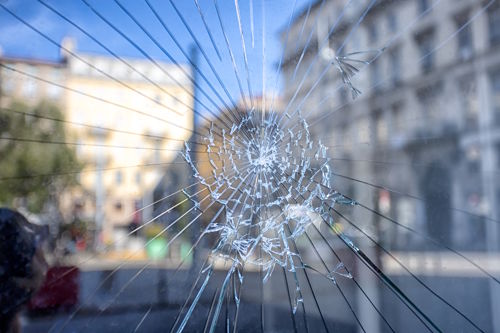
Luxury hotels are designed to project calm, discretion and authority. Yet across markets and categories, properties are increasingly confronted with acts of vandalism that undermine exactly these qualities. From paint attacks during political protests to severe room damage after private parties, and from smashed entrances during civil unrest to destruction linked to break-ins, vandalism has evolved from a rare disruption into a structural operational risk.
The high-profile incident at a hotel in Berlin, targeted during an international energy summit, illustrates how quickly a hotel can become a symbolic stage. What begins as a political message or a spontaneous act of protest often ends with tangible damage: stained façades, blocked entrances, shattered glass and a deeply unsettled guest experience. For operators, the impact goes far beyond repair costs. Brand perception, guest confidence and long-term loyalty are immediately affected.
The Changing Face of Vandalism in Hospitality
Vandalism in hotels no longer follows a single pattern. It has become more diverse, more situational and, in many cases, more predictable. External attacks linked to demonstrations or public unrest coexist with internal damage caused by guests themselves. Both forms affect the same core asset: trust.
While spectacular incidents attract media attention, the majority of vandalism occurs quietly, behind closed doors. These cases rarely stem from deliberate malice. Alcohol, anonymity and group dynamics are often enough to escalate behaviour. One-night local bookings, spontaneous celebrations or unofficial room parties regularly result in broken furniture, damaged bathrooms or destroyed technical installations. For owners, these incidents are particularly frustrating because they often appear preventable in hindsight.
Why Vandalism Is Never Just One Problem
Treating vandalism as a single issue leads to ineffective solutions. Internal and external risks require different strategies, yet they intersect operationally. A hotel affected by visible damage, regardless of the cause, sends an unintended signal to guests. Safety is questioned, professionalism is doubted and loyalty suffers.
External vandalism is usually symbolic. Hotels become backdrops or collateral damage during protests, strikes or political demonstrations. Internal vandalism, by contrast, is functional and opportunistic. It exploits weak controls, unclear accountability and delayed intervention. Both types challenge a hotel’s ability to maintain order without compromising hospitality.
Internal Damage and Party-Driven Incidents
In nightlife destinations, urban centres and event-driven markets, party-related vandalism has become a routine operational risk. Experience shows that damage often follows identifiable patterns. Short-stay local bookings, unusual group behaviour or reservations timed around major events tend to carry higher risk.
International operators increasingly rely on smarter booking logic and calibrated filters. These tools do not replace human judgement but support it. Riskier reservations are not automatically rejected, but they are managed differently. Additional safeguards, clearer communication and firmer expectations are applied where appropriate.
Booking Logic, Check-In Discipline and Early Intervention
The check-in process has become one of the most effective control points. Credit card pre-authorisations combined with proper identity verification establish accountability from the outset. When executed professionally, these measures do not alienate guests. They communicate seriousness, structure and fairness.
Early intervention has also evolved technologically. Smart noise monitoring systems allow staff to react before situations escalate. These tools measure sound levels without recording conversations and alert teams when thresholds are exceeded. Their purpose is not surveillance, but prevention and de-escalation. In many cases, timely intervention prevents damage entirely.
Design decisions reinforce these efforts. In party-heavy markets, hotels increasingly invest in vandal-resistant interiors. Fixed furniture, scratch-resistant materials and reinforced installations reduce repair cycles and operational downtime. These choices are pragmatic, not aesthetic compromises. They protect both the asset and the guest experience.
When Hotels Become Collateral Damage
In major cities such as Paris, London or Berlin, hotels are often affected by public unrest even when they are not the intended target. Visibility itself becomes a risk factor. Modern security strategies therefore prioritise flexibility and rapid response.
Lockdown protocols allow operators to restrict access to registered guests within seconds, securing entrances, elevators and sensitive areas without causing panic. Physical protection has evolved as well. Security films applied to glass façades prevent shattering, reduce injury risk and delay forced entry.
Equally important are preventive operational measures. When demonstrations are announced, experienced hotels remove or secure mobile outdoor furniture, planters and waste containers that could otherwise be used as projectiles. These preparations are discreet but highly effective.
Security and Design Strategies for High-Risk Urban Locations
Discretion is often the most powerful security tool. During periods of unrest, hotels frequently redirect guests through secondary entrances while dimming or temporarily closing prominent main doors. By lowering their visual profile, properties attract less attention and allow guests to move calmly and safely.
These strategies are not about hiding, but about controlling exposure. For guests, the experience remains composed and professional. For operators, risk is reduced without visible disruption.
Technology in 2026
Security technology has moved beyond passive observation. AI-supported video systems now identify unusual crowd formations or aggressive movement patterns in real time, enabling earlier intervention by security teams.
Lighting systems are increasingly integrated with acoustic sensors. When glass breakage or distress signals are detected, lighting automatically switches to maximum brightness, creating immediate deterrence. The response is instant and non-confrontational.
Another emerging development is the use of internal warning systems within hotel groups and cooperations. While cross-border data sharing is legally restricted, many operators maintain internal records of serious incidents involving identifiable guests. Within legal boundaries, these systems support informed decision-making and protect staff, assets and other guests.
When Incidents Happen
No system eliminates all risk. What distinguishes resilient hotels is the quality of their response. The first hours after an incident are critical. Premature clean-up can destroy evidence and complicate insurance claims. Securing the area, documenting damage thoroughly, involving authorities where appropriate and notifying insurers promptly are essential steps.
Guest communication is equally decisive. Travellers do not expect perfection, but they do expect transparency and reassurance. Calm, factual messaging that acknowledges the incident and confirms that safety has been restored prevents speculation and preserves trust.
Liability issues often arise when guests are responsible for damage. While claims may theoretically extend over long periods, practical recovery depends on clear identification, solid documentation and timely action. Structured payment processes, clear house rules and transparent damage policies consistently outperform retrospective solutions.
Guest Confidence as a Commercial Asset
From a guest perspective, vandalism is not judged by intent but by impact. Visible damage, police presence or restricted access can quickly erode comfort and trust. Guests who feel unsettled rarely return.
Hotels that manage incidents quietly, decisively and professionally protect not only their reputation but their revenue. Confidence, once lost, is expensive to regain.
Why Resilience Now Defines Hotel Quality and Value
For hotel owners and future investors, the conclusion is clear. Vandalism is no longer an exceptional disruption. It is a foreseeable operational factor that must be addressed through design, technology, processes and communication.
Guests judge hotels not by whether incidents occur, but by how confidently they are handled. Visible control, professional preparedness and calm authority have become integral to perceived quality and luxury.
In a hospitality landscape shaped by social tension, political expression and changing travel behaviour, resilience is no longer optional. It is a value driver. Not the absence of disruption, but the ability to absorb it without losing trust, is what ultimately protects reputation, guest loyalty and asset value.