
The Shift Towards Structured Dining
Across major hospitality markets, a structural shift is reshaping how restaurants operate. Time-limited reservations are becoming increasingly common, redefining both the guest experience and the economics of dining.
What was once an implicit understanding – that a table could be occupied for the duration of an evening – is now being replaced by clearly defined seating windows. This development reflects not a change in hospitality values, but a response to growing operational pressure.
Rising Pressure on Restaurant Profitability
Restaurants are operating under intensified economic constraints. Rising labor costs, increasing rents, and volatile supply chains have significantly tightened margins across key markets.
At the same time, reservation behavior has become less predictable. No-shows and last-minute cancellations disrupt planning, while peak-time demand concentrates revenue into narrower windows.
In response, many operators rely on multiple seatings per evening. Time-limited reservations provide the structure required to manage this model efficiently and reduce revenue volatility.
Operational Reality – The Pressure Behind the Concept
The implementation of fixed seating windows introduces a new level of operational complexity. Service becomes tightly choreographed, with kitchen and floor teams working against defined timeframes.
Small delays can have cascading effects. If one course is served late, the entire sequence of the evening shifts, putting pressure on subsequent reservations. The margin for error becomes significantly smaller.
The end of the dining experience is particularly sensitive. Guests often react negatively when the conclusion of their visit feels rushed, especially when signals such as early bill presentation or visible waiting guests create a sense of urgency. Managing this transition without compromising the atmosphere has become a critical capability for operators.
Technology as an Enabler of Control
Digital reservation systems have accelerated the adoption of time-limited seating. Platforms that offer real-time availability, automated confirmations, and demand forecasting enable restaurants to structure bookings with precision.
At the same time, new models are emerging. Some operators use deposit-based or pre-paid reservation systems, treating dining more like a scheduled event. Others experiment with differentiated booking options, where extended seating durations are positioned as a premium offering.
These approaches reflect a broader shift towards managing time as a measurable and monetizable resource.
The Psychology of Time-Limited Dining
Time constraints do not only affect operations; they fundamentally change guest perception.
Dining, particularly in higher-end segments, is often associated with relaxation and escapism. A predefined time limit introduces a sense of structure that can conflict with this expectation. Even when not explicitly enforced, awareness of a limited timeframe can influence behavior.
This has direct revenue implications. Guests who feel constrained are less likely to extend their experience with additional courses, desserts, or a second bottle of wine. As a result, operators face a strategic trade-off between higher table turnover and increased spend per guest.
Identifying the balance point between these two drivers is essential for long-term profitability.
Diverging Cultural Expectations
Acceptance of time-limited reservations varies significantly across regions. In dense urban markets, particularly in Northern Europe and North America, structured seating times are widely understood.
In contrast, in regions where dining is culturally associated with extended social interaction, rigid time limits can feel misaligned with guest expectations.
For hospitality businesses, this underlines the importance of local market awareness. Operational strategies that succeed in one city may not translate effectively to another without adaptation.
Positioning and Brand Implications
The suitability of time-limited reservations depends heavily on concept and positioning.
High-turnover venues and casual formats can integrate structured seating without significantly impacting perceived value. In these environments, efficiency is part of the offering.
For premium and fine dining concepts, the dynamic is different. The experience itself is central to the value proposition. Strict time limits risk undermining brand perception if they conflict with expectations of a relaxed and immersive environment.
The decision to implement time-based restrictions is therefore not purely operational, but strategic.
Designing the Transition – Preserving the Experience
Operators are increasingly focusing on how to manage the transition at the end of a reservation.
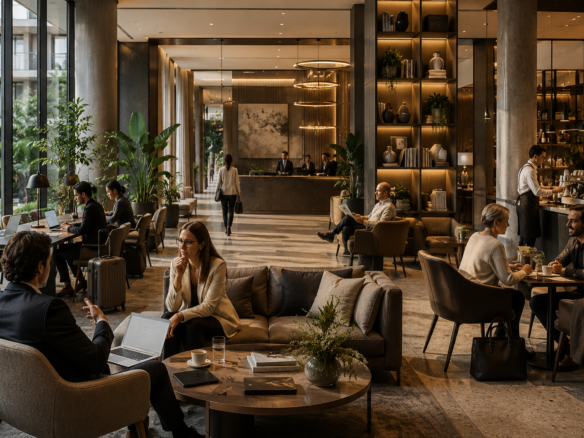
Rather than abruptly ending the dining experience, some restaurants introduce intermediary spaces such as bars or lounges. These areas allow guests to continue their evening in a more relaxed setting while freeing up dining tables for incoming reservations.
This approach maintains the perception of hospitality while supporting operational efficiency. It reflects a broader shift towards designing the guest journey beyond the table itself.
Workforce and Accessibility Considerations
The impact of time-limited dining extends beyond guests.
For staff, high-turnover service environments require sustained intensity and precision, increasing the risk of fatigue and burnout. In an industry already facing labor shortages, this operational model can create additional pressure.
Accessibility is another consideration. Fixed time windows may not align equally with all guest groups, including families, elderly diners, or individuals who require a more flexible pace. Addressing these factors is increasingly relevant as hospitality businesses seek to balance efficiency with inclusivity.
A Structural Evolution Rather Than a Temporary Trend
Time-limited reservations are part of a broader structural transformation within the hospitality industry. As cost pressures persist and operational models become more data-driven, structured seating will remain a key tool for revenue management.
At the same time, the fundamental expectation of hospitality remains unchanged. Guests continue to value atmosphere, attention, and experience.
The long-term success of this model will depend on how effectively restaurants integrate efficiency with genuine hospitality, ensuring that operational necessity does not override the essence of dining.
Looking to buy, sell or position a hospitality business?
Hogahero connects curated hospitality assets, operators and opportunities.
Create a listing or explore opportunities