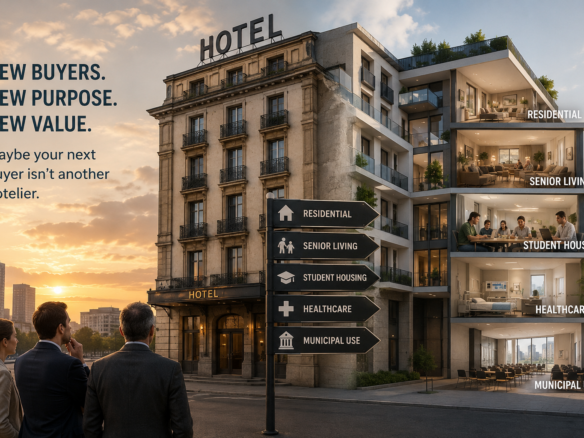
There is a particular silence that accompanies a family hotel succession and its handover in hospitality. It is a weighted quiet, found in the transition between the last guest’s departure and the first new arrival’s breath. The outgoing owner still walks the corridors with memory, hearing the echoes of weddings from 1984, while the new operator sees only potential – unpolished, demanding, and raw.
Across Europe and beyond, countless family-run hotels are entering this state of transition. Their histories are generous, their guest books loyal, yet their positioning no longer fits a market defined by mobility, emotional travel, and the subtle shift from passive indulgence to active restoration. The question is no longer how to fill beds, but how to carry a soul into a new era without breaking it.
The Discipline of Editing in Family Hotel Succession
What comes next is neither reinvention nor nostalgia. It is the discipline of editing. A hotel that carried childhood summers and familiar breakfast rituals does not survive its second life by erasing these layers, but by curating them with intention.
The inherited oak buffet that once held decades of crystal is no longer just furniture; it is a narrative anchor. When it is stripped of its heavy lace and repurposed to hold only local sourdough, mountain cheese, and handwritten trail notes, it stops serving a function and begins serving memory in a contemporary form. The transition from tradition to relevance is not demolition, but distillation – the art of keeping the flame while discarding the ash.
The Quiet Historian behind the Housekeeping Cart
This principle extends beyond objects into the humans who held the house together. We often talk of “staff,” but in a family hotel, they are the living library. The housekeeper who knows the specific creak of every stair, who remembers when the shutters were painted sea-green, and who has watched entire families grow over generations, does not belong in a uniform of anonymity.
She becomes a quiet historian – the one voice who can recount the origins of the house and who understands why the new terrace must face the west to catch the dying light of October. When her knowledge is given dignity instead of being treated as an operational relic, the hotel gains more than service: it gains an unbreakable continuity that no modern franchise can simulate.
The Architecture of Presence
Transformation is not a matter of amenities; it is the orchestration of what should remain and what deserves to be surrendered. Guests today recognize authenticity not through design trends – which fade as quickly as they arrive – but through coherence. They do not travel for novelty alone, but for places that understand where they come from, why they move, and what they need to return to.
In this transformation, the shift from family inn to modern retreat is often philosophical rather than visual. The rhythm of the house begins to mirror the rhythm of the landscape. Local producers, hidden riverbanks, and the unpredictable patterns of the weather become the new concierge. Even technology serves this warmth: a discreet QR code beside an old wooden cabinet does not announce digital ambition – it whispers the story of the farmer who churned the butter at dawn, offering a bridge between the guest and the soil beneath their feet.
The Economics of a Successful Hotel Transition
And yet, romance alone cannot stabilize a business. Editing has a rigorous economy. A hotel that chooses truth over spectacle must learn a new way to value itself. It must charge not for the thickness of the marble or the variety of imported berries, but for time, access, and private rhythm. The room price becomes a “value price” in the truest sense. When a morning is spent with a local beekeeper rather than standing in a sterile buffet line, the guest does not pay for breakfast; they pay for belonging. Margins, once strained by the pressure to compete with global brands, find a quiet balance in local supply chains. Here, dignity lives alongside sustainable cost, and every Euro spent supports the very narrative the guest came to experience.
From Service to Stewardship
As the house settles into its second life, the staff no longer perform service as a script, but as a translation. The waiter becomes an interpreter of vineyard slopes; the receptionist not only arranges transfers but reads the mountain’s temperament. Roles stretch, not through the pressure of efficiency, but through the weight of pride.
To welcome a guest is no longer to deliver plates to tables, but to introduce a stranger to a home. The vocabulary changes, as does the posture. Hospitality shifts from choreography to stewardship – from a routine of tasks to a depth of relationship.
A Story That Never Ends
In this re-entered world, the hotel that once survived on loyalty alone discovers that loyalty itself must be re-earned. Not through spectacle, but through depth. Names may fade on the signage, and design cycles will inevitably turn, yet the properties that endure are the ones that refine rather than reinvent.
They inhabit their geography with precision. They accept that their past is not a burden to be hidden, but the raw material for their future. They step into their second life not by seeking the next trend, but by recognizing that the true inheritance was never the building itself – it was the intimacy of its story.
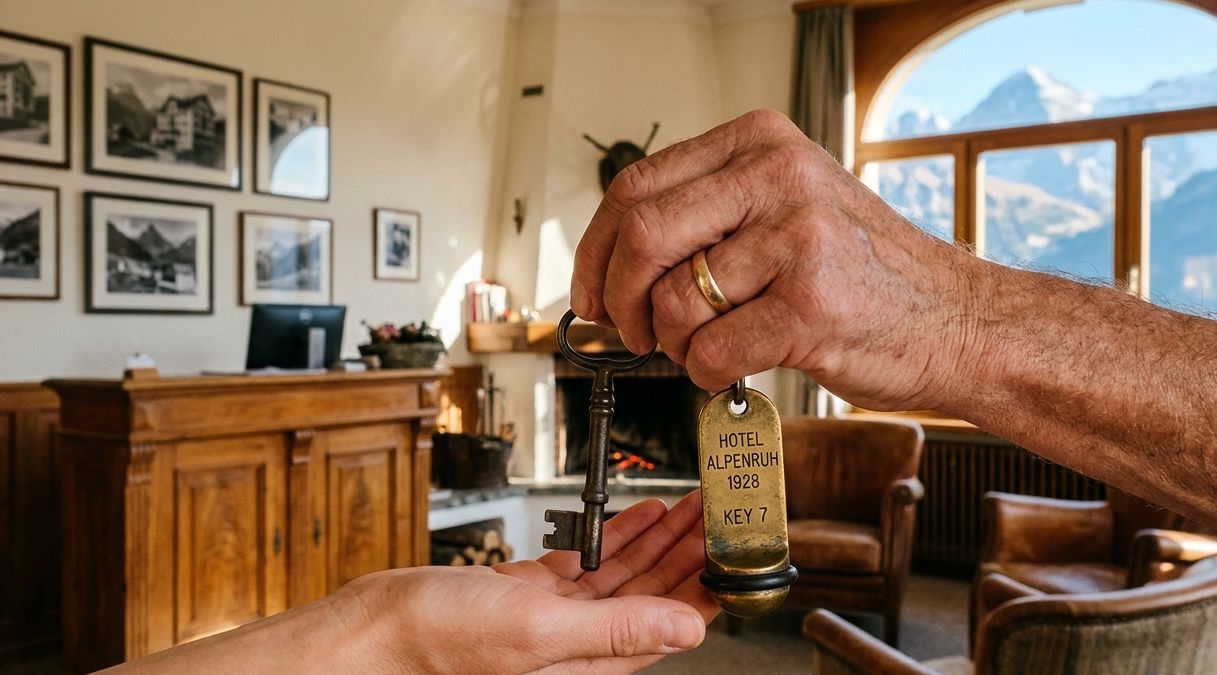
And as the keys finally change hands and the house inhales its future for the first time, there is nothing left to prove. There is only the unfolding. Let the story begin – not again, but as it was always meant to be.
Every house has a story that deserves a next chapter. Are you looking for the right hands to carry your legacy forward? List your property with Hogahero.