
For much of the last decade, tourism property investment appeared to follow a predictable script. An apartment in a desirable destination was often considered the obvious choice. The barriers to entry were relatively low, demand remained strong, and digital platforms made it possible for individual owners to reach international travellers without the infrastructure traditionally associated with the hospitality industry. For many investors, short-term rentals represented a flexible and attractive way to participate in the growth of global tourism.
Today, that certainty is beginning to disappear.
Across Europe and North America, governments are reassessing the role of short-term rentals within their housing markets. Rising rents, housing shortages, and growing tensions between residents and tourism have pushed regulators to act. Barcelona’s widely reported plan to phase out tourist apartment licences by 2028 may be one of the most visible examples, but it is far from unique. Similar restrictions and limitations have emerged in destinations ranging from Lisbon and Florence to Amsterdam, Berlin, and New York.
The public debate surrounding these measures tends to focus on platforms, property owners, and housing policy. Yet beneath the headlines, another question is quietly emerging: What happens to the value of a small hotel when the alternatives become increasingly difficult to operate?
The answer may prove more significant than many investors currently realise.
A Hospitality Licence Becomes a Strategic Asset
For decades, hospitality properties have largely been evaluated through traditional performance indicators. Occupancy rates, average daily rates, operating margins, and location quality remain essential measures of success and always will be. However, a changing regulatory environment is introducing a factor that until recently attracted relatively little attention: the ability to legally accommodate guests.
In many destinations, obtaining permission for tourism accommodation is becoming more complex, more restricted, and, in some cases, politically controversial. Existing hotels already possess something that new market entrants may struggle to secure in the future—an established hospitality licence operating within a recognised legal framework.
This may appear to be a minor administrative detail. In reality, it could become one of the defining competitive advantages of the coming years.
A small independent hotel with a valid operating licence is no longer simply a building generating room revenue. Increasingly, it represents access to a regulated market where new supply faces growing barriers. In highly sought-after destinations, that distinction could significantly influence long-term property values. The licence itself becomes part of the asset.
The Market Is Changing Alongside Regulation
Regulation alone would not be enough to create a compelling investment story. At the same time that governments are tightening controls on short-term rentals, travellers themselves are changing the way they move through the world.
The traditional separation between business travel and leisure travel has become increasingly blurred. Remote work, flexible employment models, and location-independent lifestyles have encouraged people to stay longer in destinations that previously served only as short holiday stops. Many travellers are no longer looking exclusively for a hotel room or an apartment. They want elements of both.
They value professional hospitality, but they also want space to work, the flexibility to prepare meals, and the comfort of living rather than merely staying somewhere.
This shift explains why so many hospitality companies have invested heavily in serviced apartments, apartment-style accommodation, and extended-stay concepts over recent years. These investments are not a rejection of traditional hospitality. They are an acknowledgement that guest expectations are evolving. The demand that once fuelled many short-term rental markets has not disappeared; it has matured.
Looking at Small Hotels Through a Different Lens
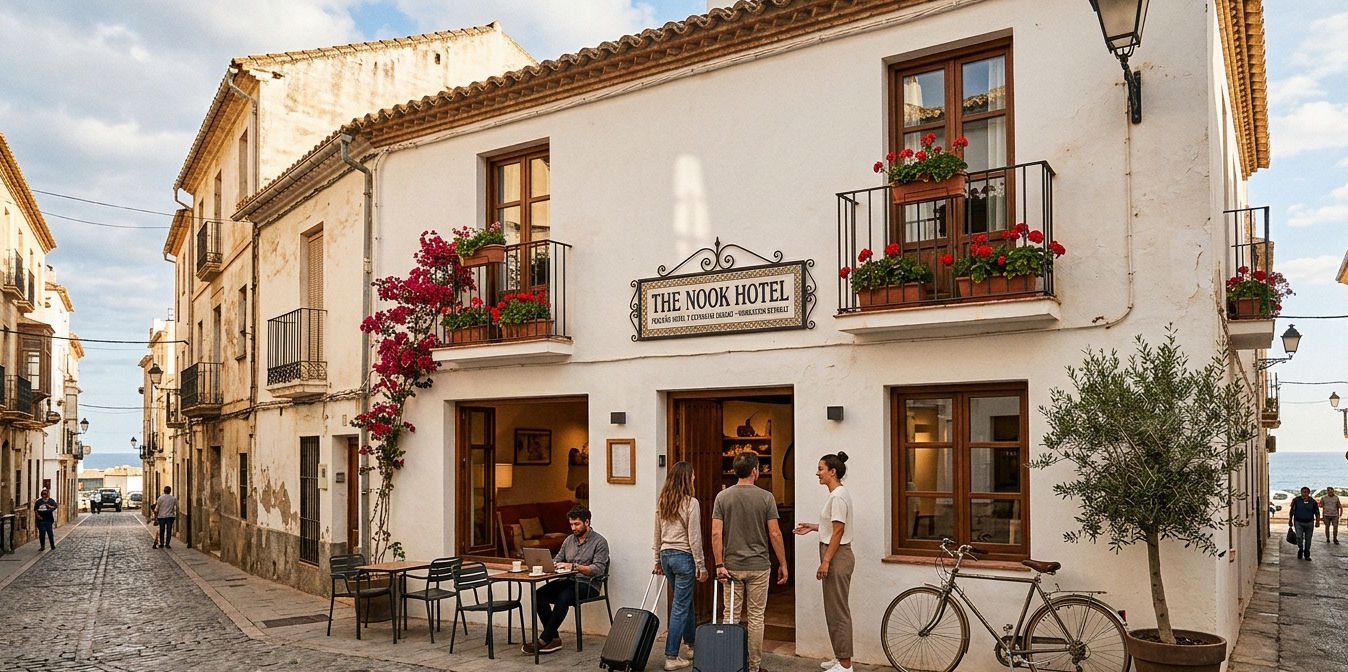
This changing environment invites a different way of looking at small hospitality properties. Imagine a modest twenty-room hotel. It may not have an international brand attached to its façade. It may not appear in investment presentations alongside luxury resorts or large urban developments. It may even be regarded by some investors as outdated compared with newer accommodation concepts.
Yet that same property could possess several advantages that are becoming increasingly valuable. It already operates legally within the hospitality sector. It already occupies a location where tourism demand exists. Most importantly, it already has the regulatory foundation required to welcome guests.
The business model, however, does not need to remain unchanged.
A traditional hotel can evolve into a serviced apartment concept. It can target longer stays. It can reposition itself as a workation destination, a digital nomad retreat, or a hybrid hospitality product that combines accommodation with co-working and community spaces. The physical asset remains largely the same. The guest proposition evolves. This flexibility may become one of the defining strengths of smaller hospitality properties over the next decade.
Opportunities Hidden in Plain Sight
This structural shift creates distinct opportunities across the entire hospitality ecosystem:
- For independent hotel operators: Tighter regulation of short-term rentals may gradually reduce some of the pricing pressure created by thousands of competing private accommodations. A more balanced market can strengthen occupancy, improve pricing power, and enhance the value of existing hospitality licences.
- For investors: Small hotels offer something increasingly attractive—a combination of tangible real estate, operational flexibility, and regulatory certainty. While residential tourism investments face growing political scrutiny in many markets, licensed hospitality assets continue to operate within clearly established frameworks.
- For entrepreneurs: The opportunity may be even more interesting. Across Europe, countless pensions, guesthouses, and independent hotels are facing succession challenges or struggling with outdated concepts. Many possess excellent locations and valuable operating licences but lack a modern vision. Reimagining these properties may prove significantly easier than developing entirely new hospitality projects from the ground up.
Sometimes the next opportunity is not hidden in a new development pipeline. Sometimes it is already standing on a street corner.
Beyond the Headlines: A Quieter Transformation
The discussion surrounding Airbnb and short-term rentals is often framed as a conflict between tourism and housing. While those debates will undoubtedly continue, they risk obscuring a broader transformation taking place within the hospitality industry.
Travellers are seeking accommodation that feels more residential. Governments are becoming more selective about where tourism accommodation can operate. Hospitality operators are experimenting with increasingly flexible concepts that blur the boundaries between hotels, apartments, and long-term living.
At the intersection of these trends, the small hotel occupies a surprisingly interesting position. For years, it was often overshadowed by newer investment models and the rapid expansion of short-term rentals. Yet changing regulations and evolving guest expectations may be restoring something many overlooked.
Not every valuable hospitality asset needs to be built from scratch. Some may already exist, quietly waiting for a new chapter.
Enjoyed this article? Follow Hogahero on LinkedIn for more insights on hospitality investment, hotel operations, hospitality real estate, and emerging industry trends.