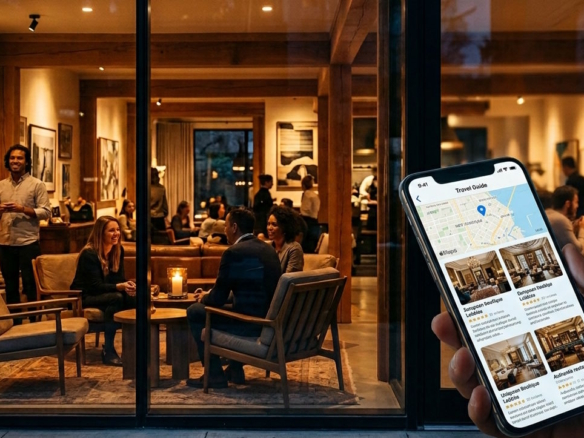

A personal welcome can be the beginning of lasting guest loyalty. AI-generated illustration for Hogahero.
From complimentary upgrades to exclusive member rates, loyalty programs have become an established part of hotel distribution. Yet for independent properties, lasting guest relationships may depend less on financial incentives than on understanding what makes people want to return.
The Changing Economics of Guest Loyalty
Hotel loyalty has become an increasingly sophisticated business. International hotel groups operate extensive rewards programs, while online travel agencies encourage repeat bookings through member discounts, complimentary benefits, and tiered privileges. For travelers, the appeal is straightforward: joining is often free, and the prospect of a better room rate or additional services makes membership an attractive proposition.
For hotel operators, however, the economics are considerably more complex. Discounts reduce room revenue, complimentary services carry operational costs, and reservations made through online travel agencies may continue to attract commission even when the guest has stayed at the property before. Although these incentives can help generate demand, their financial value depends on whether they attract genuinely additional business or simply reduce the revenue earned from bookings that would have occurred anyway.
This distinction is particularly relevant for independent hotels. Unlike international chains, which can spread the costs of loyalty infrastructure across extensive portfolios, smaller properties must consider whether conventional rewards programs complement their business model or place unnecessary pressure on already limited resources.
There is also a broader question worth examining. When a guest repeatedly books the same hotel through an online travel agency, is the resulting loyalty directed toward the property itself, or toward the platform that facilitates the reservation?
When Loyalty Comes at a Price
Programs such as Booking.com Genius, Expedia’s One Key, Marriott Bonvoy, and Hilton Honors operate under different commercial structures, but they share a fundamental objective: encouraging travelers to remain within their respective booking ecosystems.
For hotels participating in agency-based promotions, the financial implications can be substantial. Consider a room with a standard nightly rate of $200. If a hotel-funded loyalty discount reduces the price by 10%, the guest pays $180. Assuming a 15% agency commission calculated on the discounted rate, the hotel retains $153 before operating expenses.
The difference between the original room rate and the amount received is $47, although this should not be mistaken for the incremental cost of the loyalty program. A regular booking through the same agency would also attract commission, while a room that would otherwise remain unsold represents an entirely different commercial situation. Promotional funding arrangements can vary, and some discounts may be subsidized by the booking platform rather than borne entirely by the property.
What matters is the contribution each reservation makes after distribution costs, variable operating expenses, and the value of any included benefits have been considered. Understanding that contribution requires more than monitoring occupancy or the number of reservations generated by a promotion.
Research by commercial real estate services firm CBRE provides useful context. An analysis covering 4,187 US hotels found that loyalty program fees averaged approximately 2.2% of room revenue in 2024, increasing by 3.9% compared with the previous year. The study also identified additional expenses associated with benefits such as complimentary breakfast, room upgrades, and housekeeping services that are not fully reflected in the program fees themselves.
Importantly, CBRE also recognized the commercial advantages of loyalty programs, including their potential to support customer acquisition and generate demand during weaker periods. The findings therefore illustrate both sides of the equation: Loyalty can be valuable, but its costs must be understood and managed. Since the research focuses on US branded hotels, its financial benchmarks should not be applied indiscriminately to independent properties in other markets.
The Operational Cost of Complimentary Benefits
The financial implications of loyalty programs extend beyond room rates. Complimentary breakfast, room upgrades, early arrivals, and late departures may appear relatively inexpensive when considered individually, but their operational consequences can vary considerably.
Late check-out illustrates the problem particularly well. Allowing a guest to remain in a room until 2 p.m. may have little financial impact when occupancy is low and the room is not required immediately. On a busy departure day, however, several extended stays can disrupt housekeeping schedules, reduce the time available for cleaning, and complicate room allocation for arriving guests.
An upgrade presents a similar calculation. Moving a guest into a higher room category may involve little additional expense when premium accommodation would otherwise remain vacant. If demand subsequently materializes for that category, the hotel may have surrendered an opportunity to sell it at its normal rate.
Many programs therefore make such privileges subject to availability, although the precise obligations differ between brands, membership tiers, and participating properties. For smaller hotels with limited room inventory and lean staffing structures, managing these expectations can require careful coordination.
The issue is not whether complimentary benefits are inherently unprofitable, but whether their perceived value to the guest justifies their actual cost to the property.
The Difference Between Platform Loyalty and Hotel Loyalty
Online travel agencies provide independent hotels with access to international markets, established reservation infrastructure, and substantial consumer visibility. For many properties, these services are an essential part of their distribution strategy, particularly when reaching travelers who would otherwise be unfamiliar with the destination or the hotel.
Loyalty programs operated by booking platforms reinforce that relationship with the traveler. A Booking.com Genius member, for example, can receive eligible benefits at participating properties across different destinations without developing any particular attachment to an individual hotel.
The scale of this relationship is significant. According to Booking Holdings’ February 2026 investor presentation, Genius Level 2 and Level 3 members accounted for a share in the high 50% range of room nights booked through Booking.com during 2025. This demonstrates the considerable role of established loyalty members within the platform’s accommodation business.
However, these figures do not reveal how frequently members return to the same property, nor do they establish whether individual hotels earn higher profits from their participation. Platform engagement and property-level guest retention are different measurements.
From the traveler’s perspective, the ability to receive benefits across numerous properties offers flexibility and convenience. From the hotel’s perspective, it creates a more complicated form of customer retention.
A guest may return to the same property several times while continuing to make every reservation through the agency. The hotel benefits from repeat business, but the commercial relationship remains partly dependent on a third-party distribution channel. The property may continue to incur commission on each stay, even though the guest is already familiar with its facilities and service.
This does not diminish the role of online travel agencies in acquiring customers. Rather, it highlights the distinction between securing a reservation and developing a relationship that encourages guests to choose the property independently in the future.
Why Business Travelers and Leisure Guests Behave Differently
The effectiveness of a loyalty strategy also depends on the motivations behind a hotel booking.
A business traveler attending a conference or visiting clients may prioritize location, reliable service standards, transport connections, and compliance with a company’s travel policy. For frequent travelers, membership benefits can provide considerable practical value. Familiar brands reduce uncertainty, while accumulated points and status privileges may make repeated stays within the same hotel group particularly appealing.
Leisure travel is often influenced by a different combination of factors. A couple choosing a small countryside hotel in Tuscany may be drawn to the atmosphere, the surrounding landscape, the hospitality of the owners, or the opportunity to experience regional traditions. Their decision is not necessarily driven by the expectation of collecting points or receiving an upgrade.
The memories associated with such stays can become an important commercial asset. A thoughtfully prepared dinner, a conversation with a local winemaker, or a recommendation that leads to an unexpected discovery may leave a stronger impression than a modest reduction in the room rate.
This distinction should not be exaggerated. Business travelers can develop strong emotional connections with particular hotels, just as leisure guests may be highly price-sensitive. Nevertheless, independent properties in distinctive destinations often have opportunities to create guest relationships that are difficult to replicate through standardized rewards systems.
The Overlooked Opportunity After Check-Out
Hotels invest considerable resources in attracting new guests, maintaining visibility on booking platforms, and encouraging positive online reviews. Yet the period following departure is not always approached with the same commercial attention.
A guest may receive an automated satisfaction survey or a request to leave a review. Beyond that, communication may be limited, particularly at smaller properties where daily operations take precedence over long-term customer relationship management.
For a hotel that has already delivered a successful stay, this can represent a missed opportunity. Returning guests are familiar with the property, its location, and the experience it offers. They have already overcome much of the uncertainty involved in choosing unfamiliar accommodation, although this familiarity does not necessarily mean they will book again.
Rather than relying exclusively on financial incentives, independent hotels can use their knowledge of the destination to create relevant opportunities for future stays. The objective is not to contact every former guest with another promotion, but to identify occasions when the property can offer something genuinely connected to a guest’s interests.
Turning Regional Experiences into Reasons to Return
Consider a small boutique hotel in Tuscany that welcomes a couple during the spring. Throughout their stay, they show an interest in local wines, visit nearby vineyards, and enjoy the region’s culinary traditions.
Several months later, the hotel develops an autumn experience around the grape harvest, working with a local producer to arrange vineyard visits, a special dinner, and accommodation over a long weekend.
For former guests who have expressed an interest in wine and agreed to receive relevant communications, an invitation to this event could provide a compelling reason to revisit the region. The offer need not depend on reducing the room rate, since its appeal lies in the experience and the opportunity to participate in something they might otherwise overlook.
Similar opportunities exist in many destinations. Olive harvests in Greece, seasonal food festivals in Italy, cultural celebrations in Thailand, or regional music events in France can provide a basis for carefully targeted returning-guest offers.
The potential is particularly interesting for hotels located in regions with distinctive seasonal identities. A property that attracts visitors during the summer may be able to introduce former guests to a quieter period of the year, while a countryside retreat could develop experiences around local traditions that receive less attention during the main holiday season.
Such initiatives also create opportunities for collaboration with restaurants, producers, guides, and cultural organizations. Instead of competing primarily on accommodation prices, the hotel becomes part of a wider regional experience.
The Role of Food and Beverage in Guest Relationships
For properties with a restaurant, bar, or established culinary identity, food and beverage can play an important role in developing these relationships.
A memorable meal may become one of the defining experiences of a hotel stay, particularly when it introduces guests to local ingredients, regional cooking techniques, or producers they would not otherwise encounter. Hotels with strong culinary offerings can build on these experiences through seasonal menus, chef-led events, wine tastings, or collaborations with neighboring businesses.
There is a commercial distinction between offering a complimentary meal simply to secure a reservation and creating a culinary experience that guests consider worth traveling for. The former adds a cost to an existing booking, while the latter may help generate demand at a sustainable price.
Developing such experiences requires careful planning. Restaurants must account for staffing, food costs, supplier arrangements, and realistic guest demand. A special event that appears attractive from a marketing perspective will only contribute to profitability if its revenue justifies the resources involved.
For smaller hotels, the objective should therefore be to make better use of their existing strengths rather than introduce elaborate programs that create additional operational pressure.
Guest Retention as Part of Revenue Management
The commercial potential of targeted guest engagement becomes particularly relevant when it is aligned with periods of lower demand.
A coastal hotel may operate close to capacity during the summer but experience significantly weaker occupancy in spring or autumn. A rural property may attract weekend visitors while struggling to fill rooms during the working week. In both situations, relevant offers to previous guests could help generate additional reservations without relying entirely on broad discount campaigns.
Consider a hypothetical boutique hotel that records 1,000 individual booking parties over the course of a year. If a returning-guest initiative generates 50 genuinely additional reservations, each averaging three nights at $150, the resulting gross room revenue would amount to $22,500.
This is an illustrative calculation rather than a forecast. The actual financial contribution would depend on operating costs, marketing expenditure, the profitability of any included services, and whether those bookings would otherwise have occurred.
The example nevertheless demonstrates why guest retention should be evaluated as part of a hotel’s broader revenue strategy rather than treated solely as a marketing exercise. Relevant measurements include incremental bookings, contribution margin, repeat-stay frequency, and the cost of acquiring or reactivating a guest.
A relatively modest campaign can be worthwhile if it generates profitable stays during periods when rooms would otherwise remain unoccupied, while an apparently successful promotion may disappoint if its additional benefits consume most of the revenue.
When Guest Data Remains Disconnected
One reason smaller hotels may struggle to develop personalized guest relationships is that useful information is often scattered across different operational systems.
The property management system (PMS) typically handles reservations and accommodation-related information, while the point-of-sale system (POS) records restaurant and bar transactions. Customer relationship management tools, where available, may store communication preferences, previous interactions, and marketing activity.
When these systems are not integrated, hotels can have an incomplete picture of the guest experience.
The reservations team may know that a couple has visited the property three times, while the restaurant team remembers their interest in regional tasting menus. If these observations remain isolated, the hotel may never identify an opportunity to invite the guests to a future culinary event.
Technology can help connect relevant information, but sophisticated software is not necessarily a prerequisite for improving guest retention. Even smaller properties can establish consistent processes for recording voluntarily shared preferences, managing appropriate communication permissions, and developing offers based on genuine guest interests.
Any such approach must respect applicable privacy and data protection requirements. Information collected during a stay cannot automatically be repurposed for marketing, and hotels must have an appropriate legal basis for processing personal data and sending promotional communications.
The commercial objective should be to create more relevant communication, not to collect as much information as possible.
Loyalty Beyond Repeat Bookings
Not every satisfied guest will return to the same destination, regardless of how successful the original stay may have been.
A traveler visiting a remote island or undertaking a long-distance journey may have no immediate intention of repeating the experience. Someone who enjoys discovering a different country each year may prefer exploring unfamiliar places to revisiting a favorite hotel.
This does not mean the relationship has lost its value.
Guests who speak enthusiastically about their stay, recommend the property to friends, or share their experiences with others can contribute to future demand even if they never make another reservation themselves.
For independent hotels, where reputation and personal recommendations can influence purchasing decisions, this form of advocacy deserves recognition alongside conventional repeat-booking metrics.
Recommendations do not automatically translate into commission-free reservations, nor can their commercial impact always be measured precisely. A referred traveler may still complete the booking through an online travel agency, and positive word of mouth does not guarantee a sale.
Nevertheless, the willingness of former guests to recommend a property reflects a form of loyalty that extends beyond the number of nights they personally spend there.
Finding the Right Approach for Independent Hotels
Conventional loyalty programs are not unsuitable for every independent property. Online travel agencies remain important distribution partners, and structured rewards can be effective when their commercial benefits outweigh their costs.
The appropriate strategy depends on the hotel’s location, guest profile, accessibility, operating model, and competitive environment.
A property serving predominantly corporate travelers may benefit from predictable privileges and negotiated rates, while a small resort in a distinctive leisure destination may find greater value in personalized invitations, seasonal experiences, and relationships with regional partners.
Hotels should also recognize that not every guest wants continued communication. Some travelers value a memorable stay without any expectation of an ongoing relationship, and excessive or poorly targeted marketing can undermine the positive impression a property has worked hard to establish.
For independent operators, the most sustainable approach may therefore be selective rather than comprehensive: identifying the guests most likely to appreciate future contact, understanding what would make another visit worthwhile, and measuring whether the resulting activity creates profitable business.
Large hotel groups and booking platforms will continue to invest in sophisticated loyalty ecosystems, supported by extensive customer databases, international distribution networks, and substantial marketing resources. Independent hotels rarely have the financial or operational capacity to compete on those terms.
They do, however, possess advantages of their own. Personal hospitality, local knowledge, distinctive experiences, and genuine familiarity with guests can create relationships that are difficult to standardize across thousands of properties.
Perhaps the most effective loyalty program for a small hotel is not a loyalty program at all. It is a relationship that does not end at check-out.