
For decades, luxury in hospitality followed a clear visual language. Grand lobbies, oversized suites, polished marble, and visible symbols of wealth defined the upper end of the market. Status was displayed, not interpreted. Yet over time, this model began to lose its sharpness. As access to material comfort expanded globally, visible excess alone was no longer sufficient to signal true exclusivity.
New luxury hospitality is now defined by experience rather than possession, with privacy, time, well-being and authenticity shaping what high-end guests truly value.
What has emerged instead is a more nuanced definition. Luxury is shifting away from what can be owned and toward what can be experienced. Time, privacy, emotional resonance and authenticity are increasingly shaping expectations at the highest level of hospitality. This is not a superficial adjustment, but a structural shift that is redefining how premium properties position themselves.
From Display to Experience – The Shift Toward New Luxury Hospitality
At the core of this transition lies a redefinition of exclusivity itself. The modern luxury guest is no longer impressed by what can be easily replicated. Instead, value is found in what cannot be standardised or reproduced. Unique access, discretion and a sense of personal relevance have replaced spectacle as the defining elements.
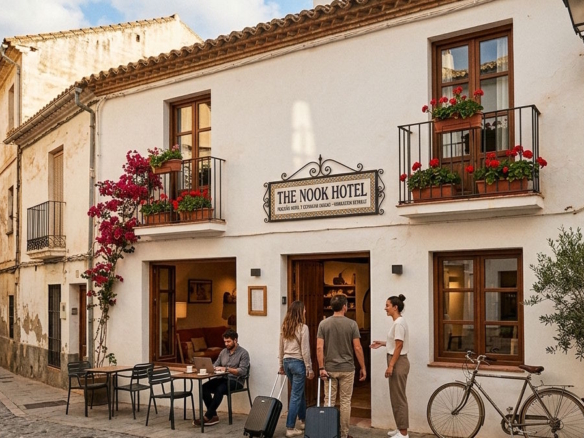
This shift has given rise to what can be described as discreet or hidden luxury. In an increasingly exposed and connected world, privacy has become one of the most valuable assets a hotel can offer. For many high-net-worth individuals, luxury is no longer about visibility, but about the ability to remain unnoticed. The freedom to move without attention, to exist without constant documentation, has become a rare form of privilege.
Designing for the Senses, Not for Attention
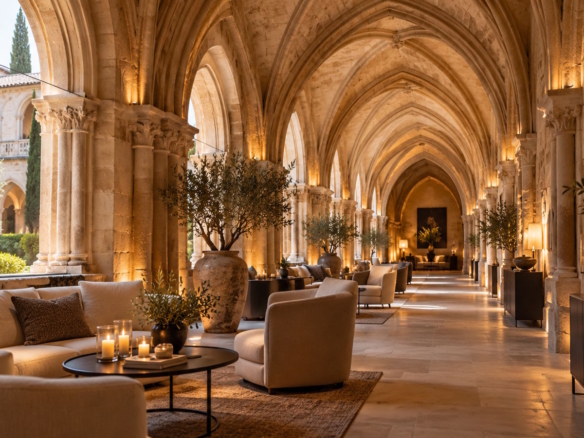
At the same time, the sensory dimension of hospitality is undergoing a quiet transformation. Rather than amplifying stimulation, many high-end properties are beginning to reduce it. Calm, balance and subtlety are replacing visual dominance.
Lighting concepts that follow natural rhythms, materials selected for their tactile qualities and environments designed to support silence are becoming central elements of the guest experience. The focus shifts from impressing the eye to supporting the entire sensory system. In this context, luxury is no longer about intensity, but about precision.
The Rise of Inner Well-Being
Beyond physical comfort, another layer is gaining importance: the alignment of mental and emotional states. Luxury hospitality is increasingly moving into a space where well-being is understood more holistically. This goes beyond traditional spa offerings and enters the realm of personal restoration.
Hotels begin to act as frameworks for reflection rather than as stages for consumption. The objective is not to entertain, but to create conditions in which guests can reconnect, recalibrate and regain clarity. In this interpretation, luxury evolves from accumulation toward presence. The shift from “to have” to “to be” becomes tangible in how spaces are designed and experiences are structured.
Operational Implications for High-End Hospitality
For operators, this transformation requires more than cosmetic adjustments. It demands a fundamental rethinking of service philosophy and guest interaction.
Personalisation is no longer an added value, but an expectation. The ability to anticipate needs without making them visible has become a defining skill. Preferences are remembered, routines are supported and boundaries are respected without explicit communication. The concept of an “invisible concierge” captures this evolution: service that is present, but never intrusive.
Parallel to this, sustainability has moved from a differentiator to a baseline requirement. High-end guests increasingly expect transparency in sourcing, operations and partnerships. The value is no longer in presenting sustainability as a feature, but in embedding it so seamlessly that it does not require explanation. Ethical consistency becomes part of the overall sense of ease.
Food and beverage concepts are evolving in the same direction. The emphasis is shifting from abundance to relevance. Menus are designed to support well-being, energy and balance. Non-alcoholic pairings gain equal standing, and dining experiences become more intimate, contextual and personal. The setting often matters as much as the cuisine itself.
Technology, meanwhile, is receding into the background. Its role is not to impress, but to enable. Seamless connectivity is assumed, yet the true value lies in control. Guests expect to shape their environment intuitively, to disconnect when desired and to engage on their own terms. Technology becomes most effective when it is almost invisible.
A Redefined Understanding of Luxury
What is unfolding is a gradual but decisive shift. Luxury hospitality is moving away from material markers toward experiential depth. The focus is no longer on demonstrating wealth, but on creating conditions that feel rare and meaningful.
Properties that will remain relevant are those that understand this transition not as a trend, but as a recalibration of expectations. Time, privacy, balance and personal significance are becoming the true currencies of the high-end segment.
In this landscape, luxury is no longer defined by what is added, but by what is understood. The most valuable offering is not excess, but the ability to create an environment in which guests feel at ease, protected and fully aligned with themselves.
For owners and investors looking to actively bring hospitality assets to market, targeted visibility within the right environment becomes a decisive factor.
List your hotel and connect directly with buyers, investors and operators.