
For years, rising energy prices in hospitality were often treated as temporary volatility.
Today, that perception appears to be changing.
Across large parts of the hospitality industry, energy costs are increasingly becoming a structural business risk capable of influencing pricing strategies, operating models, investment decisions and long-term asset viability.
Recent warnings from industry organisations regarding rising operational pressure linked to geopolitical instability and energy markets reflect a broader concern spreading far beyond a single country or region.
Hotels, restaurants and mixed-use hospitality assets are now facing a difficult combination of rising utility costs, supply chain pressure, labour expenses and increasingly price-sensitive consumers.
For many operators, the challenge is no longer simply about protecting margins.
It is about maintaining operational stability in an environment where volatility itself has become part of the business model.
The Hidden Cost Spiral
One of the biggest challenges is that hospitality businesses are not only exposed to their own rising energy bills.
Higher fuel prices affect transport costs. Suppliers pass on operational increases. Food production becomes more expensive. Cooling, storage and logistics costs rise throughout the supply chain.
The result is a layered cost spiral that gradually moves through the entire hospitality ecosystem.
At the same time, operators often face limits regarding how much of these increases can realistically be transferred to guests.
There is growing concern across the sector that consumers may simply no longer absorb endless price increases without changing behaviour.
The Labour Problem Nobody Can Easily Solve
Large hospitality operations may appear more stable from the outside, but they also carry significantly heavier operational structures.
Hotels with extensive staffing requirements, multiple restaurants, large public areas, spas, conference facilities or 24-hour operations often face enormous fixed costs before a single room is sold.
Reducing personnel is rarely simple.
In many regions, operators already struggle to recruit qualified staff after years of labour shortages across hospitality. Cutting teams too aggressively can damage service quality, operational stability and long-term guest perception.
This creates a difficult balancing act: operators must control costs while simultaneously protecting the guest experience that generates revenue in the first place.
Historic Hotels Face a Particularly Difficult Reality
The pressure may become even more visible inside older and historic hospitality assets.
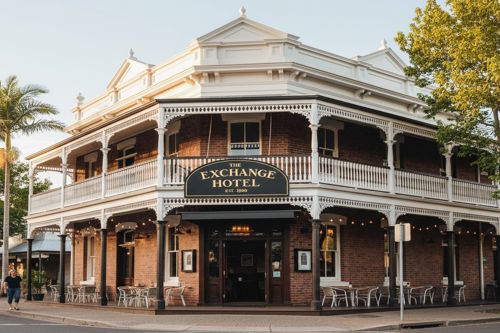
Many heritage hotels were never designed for modern energy efficiency standards. In some cases, insulation upgrades, window replacements or structural modifications are legally restricted due to preservation requirements.
As energy costs rise, these properties may face increasingly difficult operational economics.
Ironically, some of hospitality’s most visually unique and culturally valuable assets may also become some of the most operationally vulnerable.
This could gradually increase the divide between highly efficient modern developments and older hospitality properties carrying long-term infrastructure burdens.
Geopolitics Is Reshaping Travel Behaviour
The pressure on hospitality is no longer purely operational.
Geopolitical instability is increasingly influencing travel confidence itself.
As conflicts expand and global uncertainty rises, travellers begin reassessing destinations, flight routes, transit regions and long-haul travel plans. Concerns over cancelled flights, airspace restrictions, fuel prices or broader instability can quickly influence booking behaviour.
This creates another layer of unpredictability for operators already managing rising internal costs.
In some markets, this may temporarily strengthen local or regional tourism as travellers avoid long-haul uncertainty. But even domestic demand shifts are difficult to forecast in volatile economic conditions.
Hospitality businesses are increasingly being forced to operate inside an environment where both operational costs and consumer behaviour can change rapidly at the same time.
Adaptation Is Becoming a Business Strategy
Across global hospitality markets, operators are increasingly realising that reactive cost-cutting alone may no longer be enough.
The conversation is gradually shifting from short-term survival toward long-term adaptation.
For some businesses, this begins with technology.
Smart energy management systems, automated climate control, digital monitoring tools and more efficient building infrastructure are becoming increasingly important as operators attempt to reduce long-term exposure to volatile utility costs.
At the same time, operational simplification is gaining momentum across the industry.
Large menus, highly complex service structures and energy-intensive operational models are increasingly being reconsidered through the lens of efficiency rather than expansion.
In food and beverage operations, menu engineering, regional sourcing strategies and simplified logistics are no longer viewed purely as optimisation tools. For many operators, they are becoming economic necessities.
The same applies to spatial flexibility.
Hotels are experimenting with adaptive room concepts, mixed-use areas, reduced operational hours and leaner staffing structures designed to maintain profitability while reducing operational strain.
At government level, industry organisations across multiple countries are also increasing pressure for intervention measures.
Calls for lower VAT rates, reduced bureaucracy, energy protections and operational relief are no longer limited to one market alone. Similar discussions are emerging across Europe and beyond as hospitality businesses attempt to navigate a business environment shaped by overlapping crises rather than isolated disruptions.
The hospitality industry is increasingly being forced to evolve from a growth-focused model into one built around resilience, flexibility and operational intelligence.
Operational Visibility Is Becoming Critical
For many operators, the response increasingly begins with operational visibility itself.
Questions that once belonged primarily to consultants or asset managers are rapidly becoming everyday management concerns inside hotels and restaurants.
How energy-intensive are specific kitchen operations? Which menu items generate the strongest margins relative to preparation costs? Can staffing structures become more flexible across departments? Are energy contracts exposing businesses to additional volatility?
In many markets, operators are also investing more aggressively in monitoring systems, smart building technologies and operational analytics designed to identify inefficiencies that previously remained invisible inside daily operations.
At the same time, hospitality organisations across multiple regions are intensifying pressure on governments for intervention measures ranging from VAT reductions and regulatory relief to energy market protections and operational support mechanisms.
What was once viewed as a temporary economic disruption is increasingly being treated as a long-term structural challenge for the industry itself.
A Global Industry Facing Different Regional Realities
The impact of rising operational pressure is unlikely to affect all hospitality markets equally.
In colder regions, heating costs may become increasingly problematic for older buildings and large-scale operations. In warmer destinations, however, the pressure may shift toward cooling systems, water consumption and energy-intensive climate control.
Island destinations and highly tourism-dependent regions may face additional exposure due to import dependency, supply chain fragility and reliance on international flight connectivity.
At the same time, geopolitical instability itself may begin reshaping tourism flows.
As travellers become more cautious regarding long-haul routes, regional instability or transport disruptions, some domestic and short-haul destinations could temporarily benefit from shifting demand patterns.
The challenge for hospitality operators is that many of these developments remain highly unpredictable.
The industry is no longer navigating a single crisis.
It is navigating multiple overlapping pressures simultaneously.
The Industry Is Entering a More Fragile Era
One of the biggest misconceptions about hospitality is the assumption that demand alone guarantees stability.
In reality, many hospitality businesses operate on relatively thin margins while carrying substantial operational complexity.
The current combination of energy volatility, labour pressure, supply chain inflation, geopolitical uncertainty and regulatory burden is exposing how sensitive many business models have become.
For some operators, the challenge is no longer growth.
It is resilience.
This does not automatically mean the industry will face a large wave of distressed sales. However, the pressure may accelerate repositioning strategies, operational restructuring, adaptive reuse concepts and new approaches toward efficiency and flexibility.
The hospitality industry is increasingly being forced to rethink not only how properties attract guests — but how they remain operationally sustainable during periods of prolonged instability.
The era of “business as usual” may be coming to an end for parts of the hospitality industry.
For many operators, resilience is no longer about waiting for stability to return.
It is about learning how to operate inside a business environment where volatility itself may become permanent.
How Are Hospitality Operators Adapting?
Have you already implemented operational changes in response to rising energy costs, geopolitical uncertainty or shifting consumer behaviour?
We are currently observing how hospitality businesses across different markets are adapting their operational models, staffing structures, pricing strategies and asset positioning in response to increasing volatility.
Selected operator perspectives, hotel case studies and industry insights may be featured in future Hogahero editorial coverage and hospitality market reports.
If you would like to share your experience or discuss emerging market developments, feel free to contact us via: