
Regional hotels Australia are gaining momentum as investors shift their focus beyond major cities.
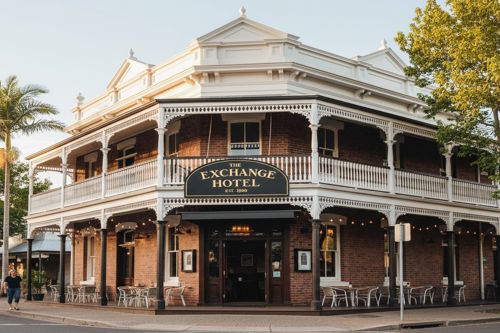
Recent transactions across Australia’s regional hospitality sector underline a shift that is becoming increasingly difficult to ignore. The sale of the Exchange Hotel in Kyogle, New South Wales, is one such example – not because it is unique, but because it reflects a broader structural movement.
What is happening in Kyogle is happening across the country.
Regional hospitality assets are moving back into focus.
A Different Type of Buyer Is Entering the Market
The buyer profile is changing.
Where regional pubs and small hotels were once dominated by experienced operators, a new wave of entrants is stepping in. These buyers are not necessarily backed by large portfolios. Instead, they are often individuals or small groups looking for a business that combines income with a tangible lifestyle component.
This shift matters.
It expands the buyer pool and increases competition for well-positioned assets.
Properties like the Exchange Hotel are no longer evaluated purely on traditional metrics such as revenue and yield. They are increasingly seen as hybrid assets – part business, part lifestyle investment.
The Hidden Champion Factor: Off-Market Opportunities
A significant share of these regional assets never officially enters the open market.
In smaller communities, discretion is not a preference – it is a necessity. Owners often avoid public listings to protect staff stability, supplier relationships, and daily operations from speculation.
As a result, many of the most attractive opportunities are traded quietly.
Access to these “hidden champions” typically happens through specialized networks and direct connections rather than traditional listing platforms. For buyers, this means that visibility alone is not enough – access becomes the real currency.
Why Regional Assets Are Becoming More Attractive
Several factors are converging.
Entry prices in regional areas remain significantly lower than in metropolitan markets. At the same time, operational models are often simpler, with strong reliance on local communities and domestic tourism rather than volatile international demand.
In locations like the Northern Rivers, proximity to established destinations such as Byron Bay or the Gold Coast adds another layer of appeal. These areas benefit from consistent visitor flow without carrying the same cost base or competitive pressure.
For buyers, this creates a compelling equation: lower acquisition cost combined with stable, diversified revenue streams.
This shift is increasingly visible across the regional hotels Australia market.
The Impact of Lifestyle Migration
Australia’s well-documented “tree change” and “sea change” movements continue to reshape regional markets.
People are relocating.
Not temporarily, but permanently.
This has direct implications for hospitality assets. Demand is no longer driven solely by tourists. It is supported by a growing base of residents who expect quality food, beverage, and accommodation offerings within their communities.
For operators, this reduces dependency on seasonality and creates opportunities to build businesses with year-round relevance.
Technology as a Value Creation Lever
One of the defining advantages of new entrants is their digital mindset.
Many regional assets are still operated with limited digital infrastructure. This creates immediate upside potential. The introduction of modern booking systems, revenue management tools, and targeted online marketing can significantly increase both visibility and operational efficiency.
In many cases, value is not created through expansion, but through optimization.
For buyers who understand digital positioning, this represents one of the most underleveraged opportunities in the market.
Cost Structures and Workforce Stability
Another often underestimated factor is operational stability.
Regional businesses frequently benefit from stronger employee retention, as staff are embedded in the local community. Lower living costs compared to metropolitan areas also contribute to a more predictable wage structure.
For operators, this translates into greater continuity and more stable cost planning – a key advantage in an industry often challenged by high staff turnover.
Sustainability as a Built-In Advantage
Regionality is not just a location benefit. It is a product advantage.
Proximity to local producers enables concepts that are both authentic and commercially viable. Farm-to-table is not a marketing angle here – it is an operational reality.
For hospitality businesses, this opens the door to strong positioning around sustainability, locality, and quality. These attributes resonate directly with the lifestyle-driven demographic moving into these regions.
Operational Flexibility as a Value Driver
One of the defining characteristics of regional hospitality assets is their flexibility.
Many properties combine multiple revenue streams – accommodation, food and beverage, gaming, events, or retail components. This diversification is not a bonus. It is often central to the investment case.
At the same time, these assets frequently come with development upside.
Unused space, repositioning potential, or the ability to refine the concept can significantly increase value over time. For the right buyer, this is where the real opportunity lies.
What This Means for the Wider Oceania Market
Australia is not an isolated case.
Across Oceania, similar dynamics are emerging. In New Zealand and other regional markets, smaller hospitality assets are attracting attention for exactly the same reasons: accessibility, flexibility, and resilience.
Unlike large-scale resorts that depend heavily on international travel, these properties are often anchored in domestic demand. This provides a level of stability that has become increasingly relevant in recent years.
A Market That Rewards Positioning
For sellers, the message is clear.
Well-structured hospitality assets with multiple income streams and a clear operational narrative are attracting strong interest. The buyer pool is broader than it was just a few years ago.
For buyers, the opportunity lies in identifying assets that go beyond surface-level performance.
The real value is often in what can be developed, repositioned, or unlocked over time.
Use the momentum of the market.
Whether through discreet matching or public exposure – connect on Hogahero with investors who understand the value of regional hospitality assets.