Why Hospitality’s Middle Ground Is Under Pressure
Across many tourism destinations, an increasingly visible contradiction is emerging within the hospitality industry. While restaurants in some locations struggle with rising costs, declining margins and inconsistent guest spending, travelers themselves are by no means spending less money overall.
In fact, many destinations continue to report strong visitor numbers and growing tourism demand. At the same time, however, hospitality spending is becoming increasingly polarized. Some guests willingly spend extraordinary amounts on highly curated culinary experiences, while others actively minimize restaurant spending altogether. What is losing relevance in many markets is not hospitality itself, but the broad middle ground between convenience and exceptional experience.
This shift is becoming visible across Europe and far beyond.
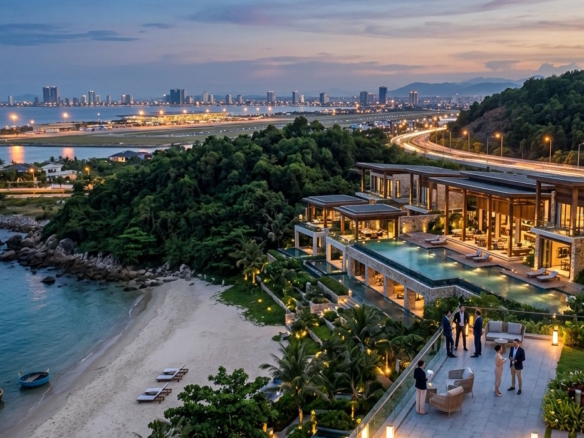
In destinations shaped by luxury tourism, international guests increasingly seek private dining experiences, vineyard dinners, chef’s tables and highly curated gastronomic concepts tied to exclusivity and regional identity. Reports of guests spending several thousand euros on individualized dining experiences no longer sound extraordinary within parts of the global luxury travel economy.
At the opposite end of the spectrum, many travelers deliberately reduce traditional restaurant spending entirely. In destinations increasingly dominated by villas, serviced apartments and high-end short-term rentals, guests often no longer view restaurants as daily necessities. Instead, dining out becomes a selective experience. Some cook privately, others rely on takeaway concepts, delivery services or casual convenience formats during large parts of their stay.
What makes this development particularly interesting is that both groups are often driven by a surprisingly similar motivation: the search for experiences they perceive as authentic, emotionally worthwhile or economically justifiable.
The Decline of Generic Dining
For years, large parts of the hospitality industry operated successfully within a broad middle segment. Restaurants did not necessarily need to be exceptional. A good location, acceptable quality and stable tourist flows were often sufficient to maintain business.
That environment is changing rapidly.
Guests today increasingly evaluate hospitality experiences through emotional relevance rather than through category positioning alone. Dining is no longer judged purely on food quality or price level. Travelers increasingly ask themselves whether an experience feels memorable, local, personal or culturally connected.
As a result, highly standardized concepts are coming under pressure. Restaurants that appear interchangeable often struggle to justify rising menu prices, particularly in heavily touristic areas where guests have become far more selective about where they allocate spending.
This creates a particularly difficult position for the hospitality middle ground. Midscale restaurants face many of the same rising labor, energy and purchasing costs as luxury gastronomy, yet they often lack the pricing power to pass these increases on to guests without resistance. While ultra-luxury dining concepts may successfully raise prices through exclusivity and scarcity, a significant price increase at a conventional midscale restaurant can quickly push guests toward supermarkets, takeaway counters, food halls or simpler alternatives perceived as offering more honest value.
In many ways, this is becoming the margin squeeze of interchangeability.
Why Convenience and Luxury Are Winning Simultaneously
One of the more interesting aspects of this shift is that modern consumers no longer behave consistently within traditional market categories.
The same traveler willing to spend generously on a unique chef’s table experience may choose the cheapest possible lunch option the following day. A guest staying in a luxury villa may avoid restaurants entirely for several evenings before spending heavily on a single memorable dining event later in the trip.
This increasingly fragmented behavior helps explain why both convenience-oriented concepts and highly differentiated luxury experiences continue to perform relatively well, while many standardized midscale operations face growing pressure.
Importantly, lower-priced concepts do not always succeed purely because they are cheap. In many cases, they also benefit from simplicity, speed and clarity of expectation. A portion of travelers appear increasingly willing to spend very little on uncomplicated meals in order to reserve larger parts of their budget for selected premium experiences later.
Under these conditions, even something as simple as takeaway food, food market concepts or what some operators jokingly describe as “station fries” can become part of a broader tourism spending logic. Guests are not necessarily reducing consumption. They are redistributing it far more selectively.
Hospitality as Cultural Positioning
This development can also be observed beyond restaurants themselves. Increasingly, destinations are transforming gastronomy into broader cultural ecosystems.
In Spain, for example, the internationally recognized Roca brothers in Girona have expanded far beyond the traditional restaurant model by combining gastronomy with hospitality, wine, local heritage, landscape and storytelling into an integrated destination experience. Rather than simply selling meals, they are effectively selling access to a regional identity and lifestyle.
Similarly, tourism increasingly influences international consumer behavior long after visitors return home. Market observations surrounding Greek honey exports to Spain suggest that travelers who experience regional products and food culture abroad often continue consuming those products later in their domestic markets. In this sense, hospitality no longer functions solely as a local service industry. It increasingly acts as a cultural export mechanism.
These developments indicate that guests are searching for something more specific than simply “good restaurants.” They are searching for experiences that feel anchored to a place, a story or a recognizable identity.
A Structural Shift Rather Than a Temporary Trend
Importantly, this development should not be interpreted as the decline of restaurants or traditional hospitality altogether. Rather, it reflects a broader structural change in how guests define value.
As hospitality becomes increasingly globalized and digitally accessible, travelers appear to place growing importance on experiences that feel emotionally specific, culturally grounded and economically justifiable. Generic dining concepts that once benefited from simple tourist traffic now face far greater competitive pressure from both ends of the market.
For hospitality operators, investors and destination stakeholders alike, the challenge may no longer be attracting visitors alone. The more important question is how tourism spending is distributed once guests actually arrive.
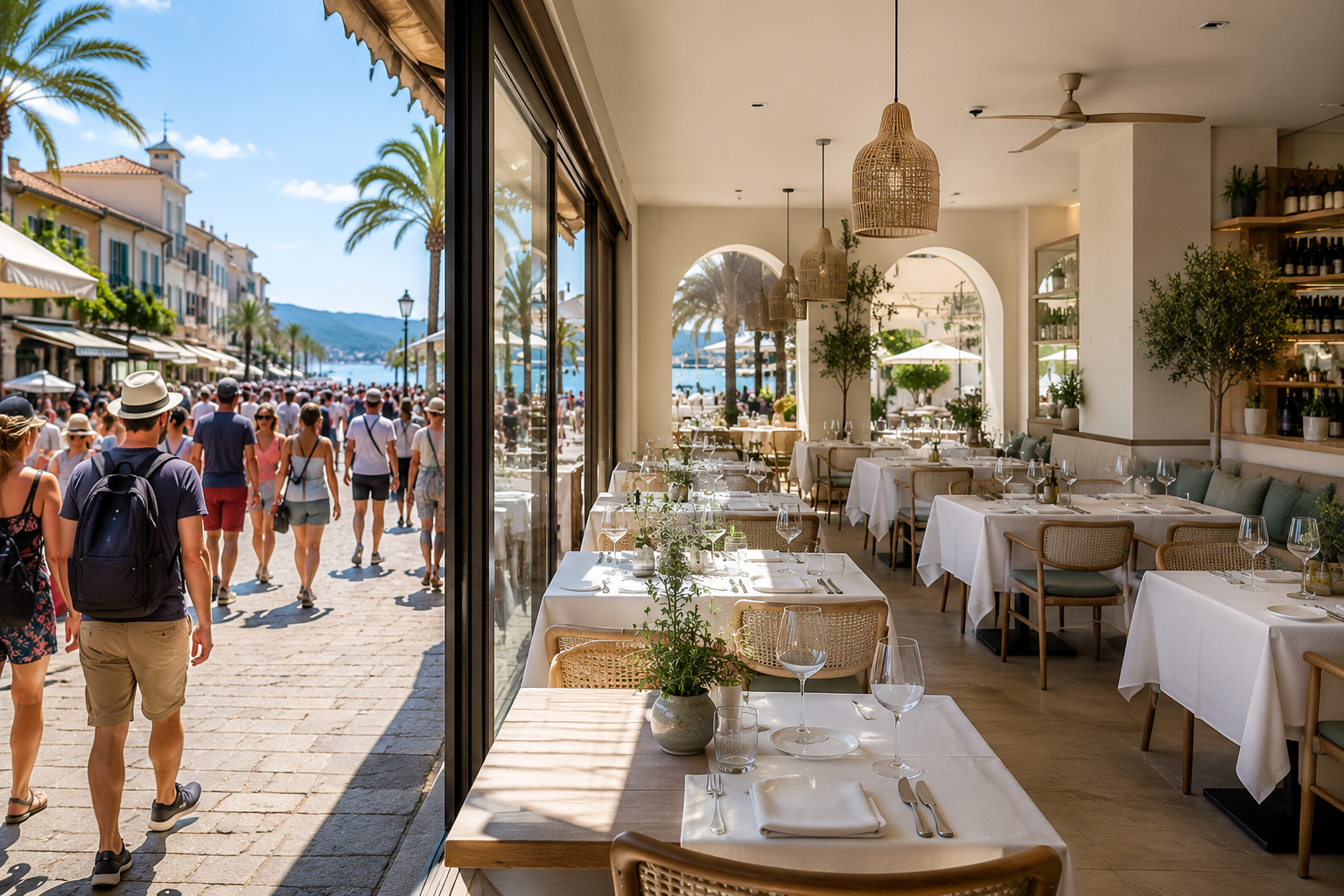
Because in today’s market, full flights and busy streets no longer automatically translate into full restaurants.
Looking to sell a hotel, restaurant or hospitality business? Create your listing on Hogahero and connect with a global hospitality audience.
Explore more hospitality insights, industry trends and market analysis in our related articles.