From infrastructure investment and confidential transactions to ESG expectations, Vietnam is entering a new phase that is reshaping hospitality investment across Southeast Asia.
For decades, Southeast Asia’s hospitality investment story has been dominated by a handful of internationally recognised destinations. Thailand, in particular, has built an extraordinary reputation through decades of tourism growth, world-class hospitality and continuous investment in hotels, resorts and supporting infrastructure. Markets such as Bangkok, Phuket and Koh Samui remain among the region’s most established investment destinations and continue to attract significant international capital.
Yet mature markets naturally encourage investors to broaden their perspective.
As experienced hospitality investors seek portfolio diversification and long-term growth opportunities, they increasingly evaluate destinations that combine improving infrastructure, expanding tourism demand and evolving real estate markets. Rather than replacing established markets, these destinations complement them by offering exposure to different stages of the investment cycle.
Vietnam has become one of the strongest examples of this evolution.
Only a decade ago, Vietnam was frequently described as an emerging hospitality market. Today, that description no longer reflects reality. The country has entered a far more sophisticated phase of development—one supported by modern infrastructure, internationally recognised hotel brands, a rapidly expanding middle class and growing confidence among institutional investors.
For hospitality owners, developers and investors alike, Vietnam deserves attention not simply because tourism is growing, but because the underlying market fundamentals are changing.
Vietnam Has Entered a Different Stage
International arrival numbers naturally attract headlines. Vietnam welcomed more than 17 million international visitors during 2024, demonstrating a strong recovery in global travel demand. At the same time, domestic tourism continues to reach record levels, creating a second pillar of demand that many neighbouring markets would welcome.
However, visitor statistics alone rarely explain why institutional investors allocate capital.
Professional hospitality investors examine a much broader set of indicators. They study demographic trends, aviation capacity, infrastructure investment, disposable household income, hotel performance, government policy and long-term economic development. These are the variables that determine whether hospitality assets continue appreciating over the next ten or twenty years.
Vietnam performs increasingly well across many of these categories. The country’s economy has expanded steadily over the past decade, urbanisation continues at pace and a growing middle class is spending more on leisure travel, premium accommodation and lifestyle experiences. Domestic demand has therefore become an increasingly important stabilising factor for hotel operators, reducing dependence on international tourism alone.
This broader economic foundation gives investors greater confidence that hospitality growth is supported by structural development rather than temporary market cycles.
Infrastructure Is Reshaping Investment Geography
Perhaps the most significant driver of Vietnam’s hospitality market is not tourism itself, but infrastructure.
Few projects illustrate this better than Long Thanh International Airport, currently under development near Ho Chi Minh City. Designed to become one of Southeast Asia’s largest aviation hubs, the airport is expected to transform international connectivity and significantly increase passenger capacity over the coming decades.
At the same time, Vietnam continues investing heavily in expressways connecting major cities with coastal destinations, upgrades to regional airports including Da Nang and Phu Quoc, expanded port facilities and modern transport corridors linking industrial centres with tourism regions.
Infrastructure projects of this scale rarely influence tourism immediately. Instead, they reshape investment geography. Improved accessibility reduces travel times, encourages new resort developments, increases land values and allows destinations previously considered secondary markets to compete for international visitors.
For hospitality investors, infrastructure often represents one of the strongest leading indicators of future asset appreciation. Markets tend to mature years after transport connectivity improves, meaning early investment decisions frequently benefit from long-term structural change rather than short-term tourism fluctuations.
Tourism Growth Tells Only Part of the Story
It would be easy to conclude that Vietnam’s investment appeal is simply the result of rising visitor numbers.
The reality is considerably more nuanced.
Travel patterns across Asia are evolving. Many international travellers who have visited Thailand several times are increasingly looking to discover new destinations within the region. This is not a rejection of established markets such as Phuket or Bangkok, but rather a natural progression among experienced travellers seeking different cultures, landscapes and experiences.
Vietnam has benefited from this trend. Its coastline, culinary reputation, cultural heritage and improving hospitality standards offer a compelling alternative for visitors wishing to explore beyond destinations they already know well. At the same time, Vietnam continues attracting first-time visitors from rapidly growing outbound markets across Asia while maintaining increasing appeal among European, Australian and North American travellers.
This diversification reduces dependence on any single source market and contributes to greater resilience within the hospitality sector.
A Market That Is Becoming Increasingly Diverse
Another defining characteristic of Vietnam’s hospitality sector is its growing diversity. The country can no longer be viewed as a single investment destination. Instead, it has developed into a collection of regional markets, each offering its own opportunities, investment profile and guest demographics.
Ho Chi Minh City remains Vietnam’s commercial and financial centre, generating consistent demand from business travellers, international companies and extended-stay guests. Hanoi combines government institutions, cultural tourism and corporate travel, creating a different investment dynamic centred around urban hospitality.
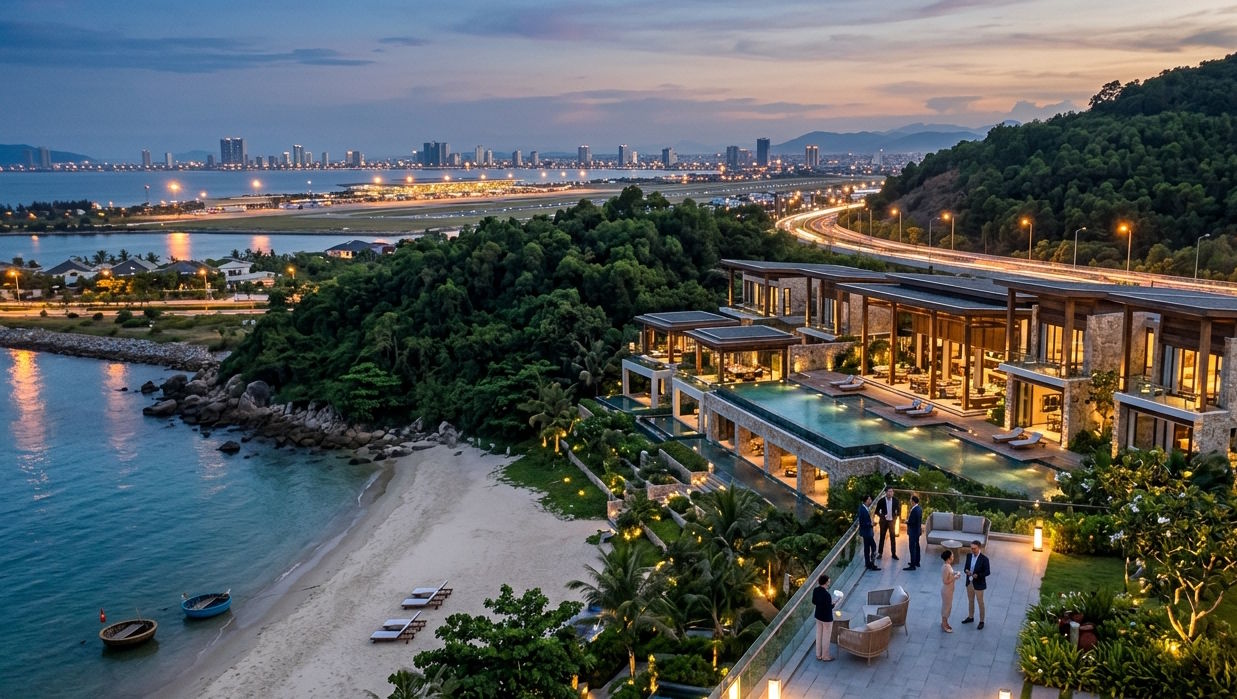
Along the central coastline, Da Nang has established itself as one of Southeast Asia’s most attractive resort destinations, combining international accessibility with conference tourism, luxury developments and a steadily expanding hospitality sector. Phu Quoc continues to evolve as a premium leisure destination, attracting integrated resort developments and internationally recognised hotel brands, while a growing number of secondary coastal markets are beginning to attract investor attention before reaching the maturity of more established destinations.
Rather than presenting a single investment story, Vietnam increasingly offers multiple hospitality ecosystems, allowing investors to match different strategies with different regions.
The Quiet Market: Why Many Hospitality Transactions Never Become Public
One characteristic of hospitality real estate is often overlooked outside the industry.
Hotels are not simply buildings. They are operating businesses with employees, supplier relationships, repeat guests, management contracts and established reputations. For many owners, particularly independent operators and family businesses, a public sales process can create unnecessary uncertainty. Employees begin asking questions, guests notice rumours, suppliers become cautious and lenders seek clarification. In an industry built on confidence and continuity, perception matters.
For this reason, a considerable proportion of hospitality transactions across Asia never reaches the public market. Instead, owners frequently choose confidential discussions with carefully selected investors through trusted advisers, specialist brokers and professional industry networks.
This approach has become increasingly common in rapidly developing hospitality markets such as Vietnam. International buyers actively seek opportunities before they become widely marketed, while sellers often prefer a controlled process that protects both operational stability and brand reputation throughout negotiations.
For buyers, access to trusted relationships frequently determines access to the most attractive opportunities. For sellers, discretion helps preserve day-to-day business while ensuring discussions remain focused on qualified purchasers rather than speculative enquiries.
As hospitality assets continue to appreciate and competition for quality properties intensifies, confidential matching is evolving from a preference into an increasingly important part of professional transaction management.
International Brands Are Raising Expectations
The continued expansion of international hotel operators is reshaping Vietnam’s hospitality landscape in ways that extend far beyond brand recognition.
Global hotel companies bring established reservation systems, sophisticated revenue management, operational standards and internationally recognised service models. They also introduce higher expectations regarding reporting, compliance, asset management and long-term operational performance.
As internationally branded hotels continue entering the market, investor expectations naturally evolve alongside them.
Location remains important, but buyers increasingly evaluate operational quality, financial transparency, management capability and long-term positioning before making investment decisions.
For independent owners, this represents both an opportunity and a challenge. Well-managed hospitality businesses with proven operating performance become significantly more attractive acquisition targets, while underperforming assets face growing competition from professionally managed alternatives.
Sustainability Has Become an Investment Requirement
Sustainability is no longer viewed simply as a marketing advantage.
Institutional investors, international hotel operators and global lenders increasingly evaluate hospitality assets through ESG frameworks before committing capital. Environmental performance, responsible governance and long-term operational resilience have become integral components of modern investment decisions.
Energy efficiency, wastewater management, resilient infrastructure and responsible coastal development now influence financing conditions, operating costs and ultimately exit valuations.
This is particularly relevant in destinations experiencing rapid tourism growth. Markets such as Phu Quoc and parts of Vietnam’s central coastline offer considerable development potential, yet long-term success will depend upon balancing expansion with sustainable planning.
Developments capable of demonstrating responsible environmental management are likely to remain more competitive as investor expectations continue evolving over the coming decade.
What Sellers Should Understand
Vietnam’s growing international profile creates attractive opportunities for hospitality property owners considering a sale. However, today’s investors expect considerably more than a desirable location and favourable tourism statistics.
Professional buyers increasingly request detailed financial statements, occupancy trends, average daily rates, guest segmentation, staffing structures, maintenance histories, regulatory documentation and clearly documented operating procedures before entering serious negotiations.
Transparency has become a competitive advantage.
Owners who prepare their businesses professionally often generate stronger buyer interest and experience smoother transaction processes than sellers relying primarily on marketing materials. Hospitality transactions increasingly resemble corporate acquisitions rather than conventional real estate sales, making operational quality just as important as the physical asset itself.
Looking Ahead
Vietnam is no longer defined solely by rapid tourism growth or competitive operating costs.
It is evolving into a sophisticated hospitality investment market shaped by infrastructure, international capital, professional hotel operations and long-term economic development.
For investors, this creates opportunities across multiple market segments and geographic regions. For sellers, it represents an environment where professionally managed hospitality businesses can attract growing international attention—particularly when transactions are approached strategically and confidentially.
The country’s greatest strength may ultimately lie not in replacing established hospitality destinations across Southeast Asia, but in complementing them. As travellers continue exploring new experiences and investors seek diversified opportunities across different stages of market maturity, Vietnam is increasingly establishing itself as one of the region’s most important hospitality markets for the decade ahead.
Continue the Conversation
Hospitality is driven by ideas, investment and innovation.
If your organisation would like to contribute market insights, discuss a hospitality development or explore an editorial collaboration, we’d be delighted to hear from you.
For owners and investors seeking confidential introductions, we also support discreet hospitality transactions worldwide.