From traditional harvest celebrations to contemporary culinary collaborations, food festivals are creating new commercial possibilities for hospitality businesses. Their success, however, depends as much on operational discipline and financial planning as on the appeal of the experience itself.
When Smaller Menus Make Room for New Ideas
For decades, an extensive menu was regarded as an expression of generous hospitality, offering guests the reassurance that almost every preference could be accommodated. In an industry increasingly confronted with rising labor expenses, fluctuating ingredient prices, and pressure on operating margins, however, the economics of maintaining such variety are becoming difficult to justify. Restaurants and hotel food and beverage departments are reconsidering not only the number of dishes they offer but also the operational complexity that accompanies them, from purchasing and storage to preparation, staffing, and waste management.
The shift is already visible in industry research. According to the National Restaurant Association’s 2026 State of the Restaurant Industry report, approximately 60% of surveyed full-service restaurant operators had removed items from their menus during the preceding year. Although the findings relate to the United States and cannot automatically be applied to every international market, they illustrate a broader commercial dilemma: operators must preserve the appeal of their dining experiences while bringing costs and operational demands under greater control.
Reducing menu complexity can improve efficiency, but it does not necessarily provide customers with a compelling reason to choose one establishment over another. This is where temporary culinary experiences offer an interesting alternative, allowing restaurants and hotels to introduce variety, collaborate with outside specialists, and attract new audiences without permanently expanding their everyday offerings. Seasonal food markets, visiting-chef programs, regional tasting weekends, and neighborhood culinary festivals can all become part of a more flexible hospitality strategy, provided their commercial potential is evaluated as carefully as their creative appeal.
From Harvest Traditions to Culinary Destinations
Food festivals are often presented as a relatively recent development in experiential hospitality, yet their foundations reach back to agricultural markets and harvest celebrations that have brought producers, merchants, and communities together for centuries. These gatherings were shaped by the agricultural calendar, local customs, and the availability of particular ingredients, giving food a significance that extended beyond its immediate commercial value. Their contemporary equivalents retain much of that appeal, particularly when regional products and culinary traditions become the defining characteristics of a destination.
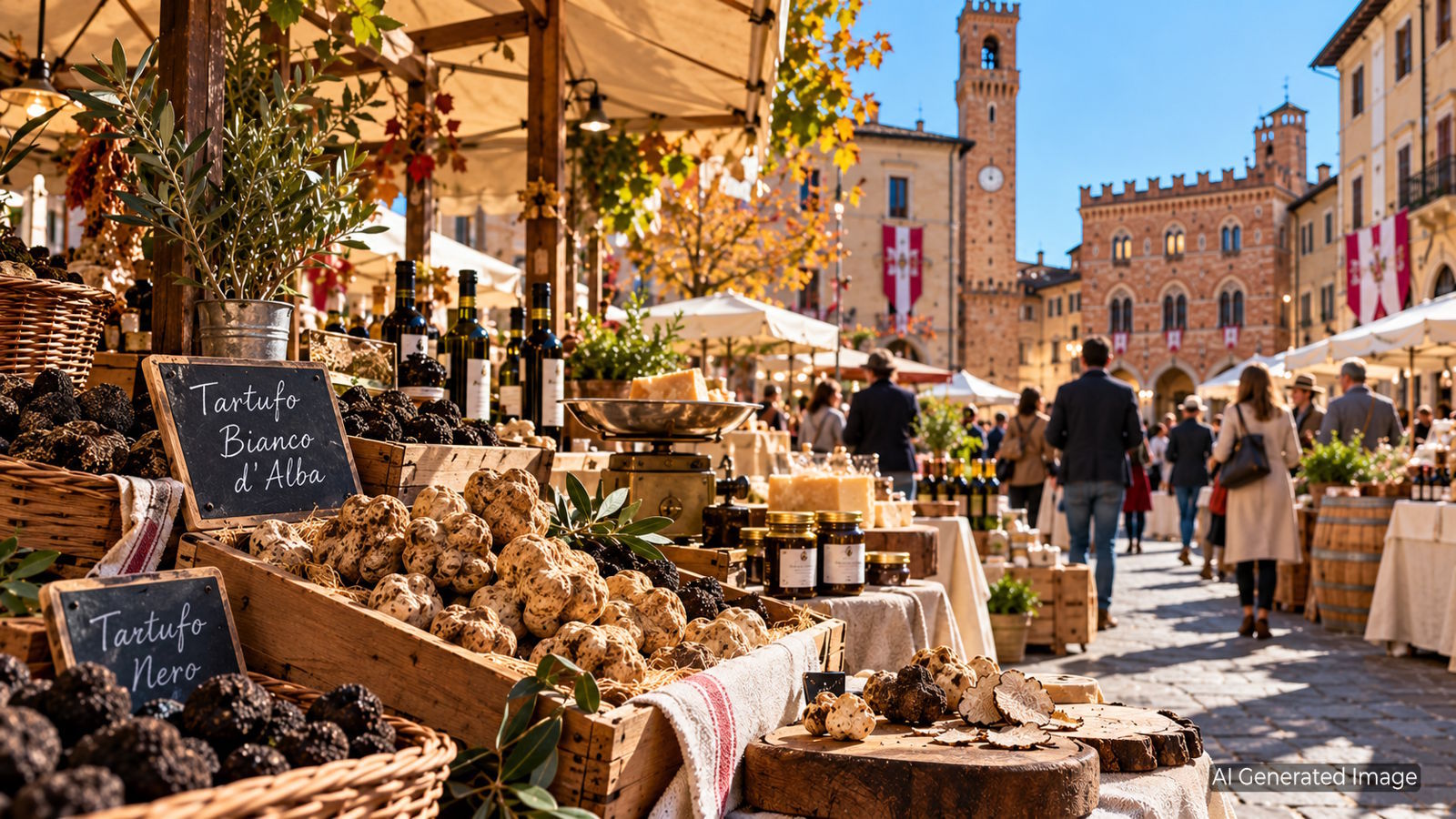
The International Alba White Truffle Fair in northern Italy provides a compelling illustration. Held annually during the autumn truffle season, the event has developed into an internationally recognized culinary attraction, drawing attention not only to the prized white truffles of Piedmont but also to the region’s restaurants, wineries, producers, and hospitality businesses. Visitors come for the distinctive ingredient, yet their experience encompasses a much broader regional economy in which accommodation, dining, retail, and cultural activities all have a role to play.
The significance for hospitality operators lies in the relationship between seasonality and destination identity. A mountain hotel organizing a weekend around locally harvested mushrooms, a coastal restaurant celebrating a traditional fishing season, or a rural property collaborating with nearby farms can develop experiences that are difficult to reproduce convincingly elsewhere. Such events offer an opportunity to highlight local expertise and ingredients while creating a sense of occasion that extends beyond the regular restaurant menu.
Seasonality also provides a natural framework for commercial experimentation, since a limited event can be evaluated before becoming a recurring feature of the business. Rather than committing to a permanent culinary concept, operators can assess customer interest, supplier performance, staffing requirements, and financial results over a defined period, making adjustments before deciding whether the experience merits a place in the following year’s calendar.
Hotels and Restaurants as Culinary Partners
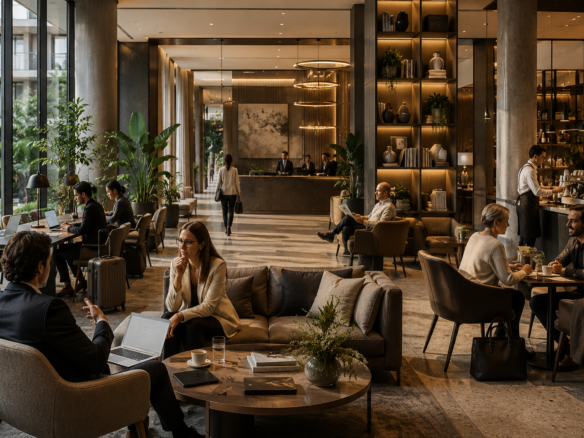
Although food festivals are frequently associated with street vendors and temporary market stalls, established hospitality businesses possess considerable advantages when developing or participating in culinary events. Professional kitchens, trained service teams, established supplier networks, reservation systems, and existing customer relationships provide an operational foundation that independent event organizers may need to assemble from scratch. Hotels, in particular, often have spaces whose commercial potential extends beyond their conventional use, including courtyards, gardens, terraces, meeting facilities, and restaurants that remain relatively quiet outside peak service periods.
The Cebu Food & Wine Festival in the Philippines illustrates how collaboration can connect different segments of the hospitality industry within a shared culinary program. Its 2026 activities involved hotels, restaurants, culinary professionals, and local producers, with participating establishments contributing their own dining experiences and expertise. Rather than concentrating every activity in one location, the festival demonstrated how individual businesses can benefit from the visibility and identity of a broader regional initiative while retaining control over their own offerings.
For hotels, participation in such programs can help attract residents who would not ordinarily consider visiting a hotel restaurant, while independent dining establishments may gain access to travelers and other customer groups through partnerships with accommodation providers. The opportunities are not limited to established festivals, since several neighboring restaurants could organize a culinary weekend together, or a hotel might invite independent chefs and producers to create a series of temporary dining experiences within its existing facilities.
A related development can be seen in the increasing willingness of hotel operators to collaborate with established restaurant brands rather than develop every food and beverage concept internally. In December 2025, Thailand-based Absolute Hotel Services announced its Absolute Culinary Collective, outlining a model that includes pop-up restaurants, guest-chef appearances, licensing arrangements, and revenue-sharing partnerships with independent culinary businesses. Although the initiative is broader than the festival market, it reflects the same commercial principle: carefully structured collaboration can introduce new culinary identities and audiences without requiring every participating business to build an entirely new operation.
The success of these arrangements depends on a clear understanding of each partner’s contribution, whether that involves facilities, culinary expertise, marketing, personnel, or access to customers. Responsibilities for purchasing, staffing, food safety, revenue allocation, and brand presentation should be agreed upon in advance, particularly when several independent businesses operate within the same event environment.
The Economics of Smaller Culinary Events
The public image of a successful food festival often involves crowded streets, numerous vendors, entertainment programs, and substantial visitor numbers. For independent restaurants and smaller hotels, however, the most commercially attractive opportunities may be considerably more modest, particularly when an event can make productive use of existing facilities without requiring extensive additional infrastructure.
A boutique hotel with an underused courtyard might organize a seasonal market featuring a limited number of regional producers, while a neighborhood restaurant could collaborate with a local winery on a series of prepaid dinners. Several establishments within the same district might also create a culinary trail that encourages visitors to explore different venues, distributing customer traffic and promotional responsibilities among the participating businesses. Depending on the format, revenue could be generated through food and beverage sales, admission fees, accommodation packages, vendor participation arrangements, or a combination of these sources.
The financial assessment must nevertheless extend well beyond projected attendance and gross sales, since additional staffing, equipment rental, security, cleaning, entertainment, insurance, and marketing can substantially reduce the contribution an event makes to the business. Operators also need to consider whether an event might displace profitable regular bookings or interfere with existing services, particularly when restaurant capacity and kitchen resources are already heavily utilized. A successful financial outcome therefore depends on the incremental contribution generated after event-specific costs and any displaced business have been taken into account.
Advance ticketing and prepaid reservations can make demand more predictable, improve purchasing decisions, and provide cash before an event takes place. Reservation systems that support capacity limits, waiting lists, and clearly communicated cancellation policies may also help reduce the financial consequences of no-shows, although prepaid income must still be managed in accordance with applicable accounting and consumer protection requirements. For smaller venues, a restricted selection of dishes and defined service periods can further simplify production planning while allowing management to estimate labor and ingredient requirements with greater accuracy.
Commercial partnerships offer another potential means of sharing costs and reducing financial exposure. Beverage suppliers, established food producers, and other relevant brands may be willing to provide products, promotional support, or sponsorship funding in return for suitable exposure to the event’s audience, while participating vendors may operate under fixed fees or revenue-sharing agreements. These arrangements should be evaluated against the financial capabilities of individual partners, since smaller agricultural producers may have limited marketing budgets, and sponsorship involving alcoholic beverages can be subject to additional restrictions depending on the jurisdiction.
For management, the central question is whether an event can create sufficient additional demand to justify the resources it consumes. A carefully controlled culinary weekend with predictable attendance may deliver a more attractive result than a large public festival whose operational demands and financial risks are difficult to contain.
Managing the Operational and Regulatory Challenges
The apparent informality of a culinary market can conceal a complex operational structure, particularly when visiting chefs, external vendors, temporary food stations, and additional visitors are introduced into an established hospitality environment. Food safety, licensing, insurance, and staffing arrangements require attention well before the event is advertised, since requirements that are straightforward during normal restaurant operations may change when food preparation moves outdoors or when independent businesses begin operating on the same premises.
Temperature control, refrigeration, allergen management, sanitation, and the handling of ingredients remain fundamental responsibilities regardless of whether food is served in a permanent dining room or from a temporary stall. Within the European Union, food businesses are generally required to maintain procedures based on HACCP principles, while operators elsewhere must comply with the food safety frameworks applicable to their location. Temporary extensions of licensed premises, outdoor cooking facilities, alcohol service, fire safety provisions, and permitted visitor numbers may also require additional authorization.
Insurance arrangements deserve particular scrutiny, as existing policies do not necessarily extend to every activity associated with a temporary event. External caterers, independent vendors, visiting chefs, temporary structures, and increased attendance may introduce exposures that require additional coverage or contractual clarification. Where several businesses participate, the allocation of liability should be established before operations begin rather than left to interpretation after an incident.
Staffing presents an equally important consideration, especially in an industry where labor availability and employee retention remain persistent challenges. An event may generate additional revenue while placing considerable pressure on kitchen and service teams that are already operating close to capacity, making realistic scheduling and workload planning essential. Visiting chefs can contribute expertise and reduce certain preparation demands, but their participation also requires coordination with existing employees, while events held outside regular opening hours may create additional labor expenses and obligations concerning overtime and rest periods.
Accurate financial reporting is necessary to establish whether these additional demands have produced a worthwhile return. Ingredients purchased specifically for an event, external services, temporary labor, sponsorship contributions, and ticket revenue should be allocated to identifiable event accounts or cost centers, with appropriate treatment in the operator’s accounting and point-of-sale systems. Without this separation, event performance can become obscured within normal food and beverage results, making it difficult to distinguish genuinely profitable initiatives from those that merely increase turnover.
Local Producers and the Commercial Value of Regional Identity
Regional producers can contribute considerably more to a culinary event than the ingredients appearing on a plate. Their knowledge, production methods, and connection to local traditions introduce a dimension that standardized restaurant concepts often struggle to reproduce, particularly in destinations where visitors increasingly encounter similar international brands and dining formats.
A cheesemaker explaining a traditional production process, a fisherman introducing a regional catch, or a farmer presenting seasonal ingredients can give guests a more meaningful understanding of the surrounding region. For hotels and restaurants, these encounters provide an opportunity to develop a distinctive culinary identity while establishing closer relationships with businesses operating within the local food economy.
Interest in regional sourcing is also reflected in the National Restaurant Association’s 2026 culinary forecast, which identifies locally sourced ingredients among the industry’s prominent trends. Although such findings should not be interpreted as evidence that local purchasing is universally less expensive or more sustainable, they reinforce the commercial relevance of provenance and regional identity within contemporary restaurant positioning.
From an operational perspective, temporary events can provide a useful environment in which to evaluate unfamiliar suppliers before entering into longer-term purchasing arrangements. Product quality, consistency, delivery capabilities, food safety documentation, and commercial terms can all be assessed on a limited scale, allowing both parties to establish whether a more permanent relationship would be practical.
For smaller producers, participation may create access to customers and distribution channels that would otherwise be difficult to reach, while hospitality operators gain the possibility of developing distinctive offerings around ingredients with a genuine connection to their destination. The strongest partnerships are those in which authenticity and commercial reliability support one another rather than compete for priority.
From Festival Attendance to Long-Term Customer Relationships
The commercial value of a culinary event should not be measured exclusively by what visitors spend during the event itself. A resident who discovers a hotel restaurant through a seasonal market may subsequently return for dinner, while a traveler attending a regional food celebration may develop an interest in accommodation packages or future culinary experiences. Independent restaurants can similarly benefit when festival participation introduces their business to customers who would otherwise have remained outside their regular audience.
Converting that initial interest into a continuing relationship requires a considered approach to reservations, communication, and customer data. Integrated ticketing and booking systems can provide useful information about attendance patterns and demand, while guests who wish to remain informed can be offered opportunities to subscribe to newsletters, receive invitations to future events, or learn about relevant dining and accommodation offers. Such communication must respect applicable privacy and marketing regulations, including the distinction between purchasing an event ticket and consenting to unrelated promotional messages.
For hotels, recurring culinary programs can also strengthen relationships with the surrounding community, an audience that is sometimes overlooked when marketing efforts concentrate primarily on overnight guests. A restaurant that becomes associated with a particular seasonal event or regional specialty may acquire an identity extending beyond its role within the hotel, potentially creating demand during periods when accommodation occupancy is less robust.
Digital marketing can support these developments through photography, video, local media coverage, and collaborations with relevant creators, but online visibility should be assessed alongside measurable commercial outcomes. Event attendance, first-time customer acquisition, subsequent restaurant reservations, repeat participation, and accommodation bookings attributable to the program provide a more useful basis for evaluation than social media engagement alone.
Over time, a successful recurring event can become a recognizable feature of a property’s calendar, encouraging customers to plan future visits around an experience they associate with the establishment. Achieving that position requires consistency, operational reliability, and a clear understanding of the audience, rather than relying solely on the promotional excitement surrounding an individual occasion.
A More Flexible Approach to Hospitality Business
The renewed commercial interest in food festivals and temporary culinary collaborations reflects a wider reassessment of how hospitality businesses can use their existing assets, professional expertise, and local relationships. Restaurants are increasingly required to balance menu appeal with operational efficiency, while hotels must consider how their food and beverage facilities can attract customers beyond the resident guest population.
Seasonal events offer one possible response, allowing operators to experiment with culinary concepts, introduce regional producers, and develop new partnerships without necessarily committing to permanent changes in their core operations. Their flexibility is particularly relevant to independent businesses, where substantial capital investment in a new restaurant concept may be difficult to justify but a carefully planned series of temporary experiences could provide a more manageable alternative.
The opportunities should not obscure the limitations, however, since the commercial viability of an event will depend on local demand, available facilities, staffing capacity, regulatory requirements, and the ability to manage costs without compromising regular operations. A format that succeeds in a well-established culinary destination may require considerable adaptation before it becomes appropriate for a small urban restaurant or a remote boutique hotel.
For operators willing to approach the concept with both creativity and financial discipline, the most promising opportunities may already exist within their immediate surroundings. An underused courtyard, a relationship with a regional producer, a distinctive seasonal ingredient, or a collaboration with neighboring businesses can provide the foundation for an experience that introduces new customers and strengthens the establishment’s position in its market.
In an industry where maintaining an increasingly extensive daily offering can place additional pressure on resources, carefully selected culinary events suggest a different approach to creating value. Rather than attempting to offer everything throughout the year, hotels and restaurants may find greater commercial potential in developing experiences that are distinctive, locally relevant, and available at precisely the right moment.